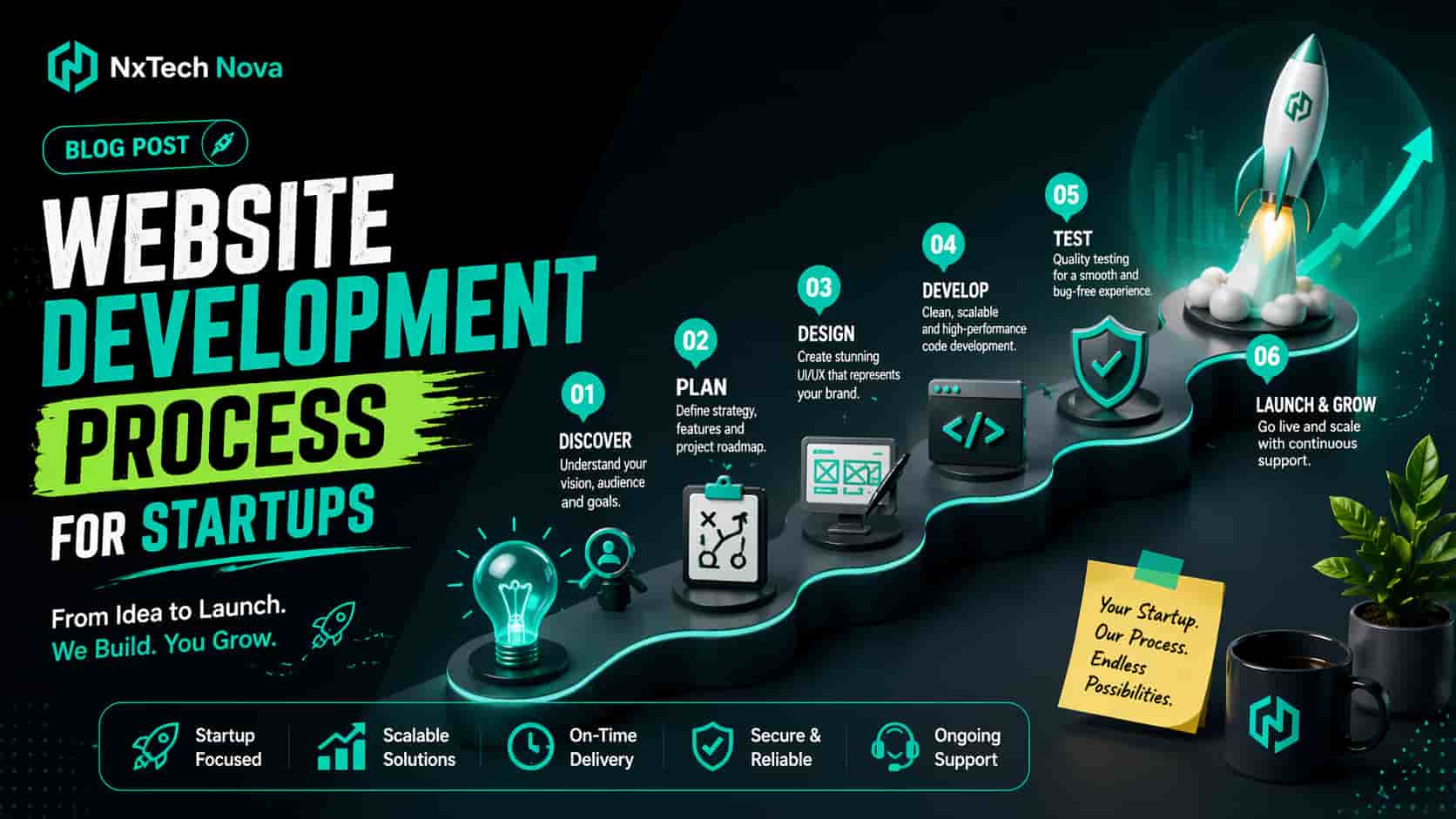
What is the typical web development process for a professional website?
It usually starts the same way.
A founder opens a laptop late at night, looks at three agency tabs, two freelancer quotes, one half finished Figma file, and a growing list of unanswered questions. How much should this cost? Should the site be on WordPress or custom code? What if it launches and still does not bring leads?
That confusion is normal. Most startups are not struggling because they lack ideas. They struggle because the website development process feels hidden behind technical language, vague proposals, and polished portfolios that do not explain what actually happens from idea to launch.
A professional website is not just a digital brochure. It is often your first sales conversation, your first credibility test, and your first proof that your brand is real. For a startup, that means every page, form, call to action, and loading second matters.
The problem is that many businesses jump straight into design before they clarify goals, user journeys, content, search intent, and quality assurance. That is how websites get delayed, budgets expand, and launch day turns into a patching exercise.
This guide is here to make the process simple.
From the first idea to post launch improvement, I will walk you through what a smart website development service should include, how to judge different agencies, which web development services matter most, and what a reliable quality assurance process actually looks like.
Here is what you will learn:
-
The real stages of web development from idea to launch
-
How startups should compare agencies without getting distracted by surface level promises
-
Which website development services are worth paying for
-
What separates a basic build from a high quality professional website
-
What a practical development and QA workflow should look like in the real world
If you are already comparing a website development company near me, this article will help you ask sharper questions and avoid expensive mistakes.
What are the stages of web development from idea to launch?
A professional website does not begin with code. It begins with clarity.
The strongest web development process follows a sequence that reduces risk, prevents rework, and keeps the project tied to business goals. When founders skip this order, they usually end up paying twice. Once for the original build, and again for corrections after launch.
Here is the typical path from idea to launch.
1. Discovery and goal setting
This is the stage where the team defines what the website must do.
That sounds obvious, but many projects begin with loose requests like “we need a modern site” or “we want something clean and premium.” Those are design preferences, not business requirements. A professional team pushes deeper.
At this stage, the right questions include:
-
What is the main goal of the website?
-
Who is the target audience?
-
What action should visitors take?
-
Is this site for leads, sales, bookings, applications, or trust building?
-
What pages are essential at launch, and what can wait?
For startups, this stage matters even more because early budgets are tight. You cannot afford to build pages and features that do not support revenue, sign ups, or validation.
2. Research and strategy
Once goals are clear, strategy turns those goals into a plan.
This is where audience research, competitor review, messaging direction, website structure, and content priorities come together. A good agency studies how similar businesses present their offer, where they create friction, and what gaps your site can fill more clearly.
This stage usually includes:
-
Audience pain points
-
Positioning and offer clarity
-
Competitor strengths and weaknesses
-
Keyword direction for key pages
-
Conversion strategy
-
Content hierarchy
For startups, strategy is what stops the website from becoming a pretty but passive asset.
3. Sitemap and user flow planning
Next comes structure.
A sitemap shows which pages the site needs and how they connect. User flow planning shows what a visitor is supposed to do after they land on a page. This is where the team decides whether the site needs a simple five page structure, a service cluster, a resource section, product pages, a booking flow, or a custom funnel.
Common pages include:
-
Home
-
About
-
Services or solutions
-
Industry pages
-
Case studies
-
Contact
-
Blog or resources
-
Legal pages
This stage is where startups start seeing the logic behind a good website. It is no longer just a visual project. It becomes a journey.
4. Wireframing
Wireframes are low detail page layouts.
They show what goes where before colors, fonts, and polished visuals are added. This is one of the most valuable steps in the website development process because it helps founders judge structure before the team spends time perfecting design.
A good wireframe answers questions like:
-
Is the message clear above the fold?
-
Is the call to action placed correctly?
-
Does the page build trust in the right order?
-
Are visitors getting answers before they are asked to convert?
-
Is the navigation simple?
When this stage is skipped, design decisions often mask deeper structural issues.
5. Content planning and copywriting
This is the stage many startups underestimate.
A professional website needs content that sells clarity before it sells anything else. Visitors should immediately understand what you do, who you help, why they should trust you, and what to do next.
Good website content includes:
-
Clear headlines
-
Specific service descriptions
-
Credibility signals
-
Objection handling
-
Strong calls to action
-
Search aware page structure
This is also where content and SEO start working together. Great copy is not stuffed with keywords. It answers real user questions in the language people actually use when searching.
6. UI design
Now the site starts to look real.
UI design brings the brand to life through layout, typography, spacing, images, buttons, color systems, and visual hierarchy. Good design is not decoration. It guides attention, supports reading, and helps the right elements stand out.
A startup website should look polished, but not at the cost of clarity. Some founders chase visual trends and end up with sites that feel impressive but are hard to scan, slow to load, or confusing to use.
The best design does three things well:
-
It reflects the brand
-
It supports the message
-
It helps people take action
7. Development
This is where the approved design becomes a working website.
The team builds the front end and back end, integrates forms, CMS features, analytics, search basics, and performance improvements, and connects the site to hosting and supporting tools.
Depending on the project, development may involve:
-
Custom coding
-
WordPress development
-
Shopify or WooCommerce setup
-
Headless architecture
-
Third party integrations
-
CRM connections
-
Custom lead capture forms
-
Blog or landing page systems
For startups, this is where choosing the right stack matters. You do not always need the most advanced build. You need the most practical one for your current growth stage.
8. Quality assurance and testing
This is where a professional project proves itself.
A site should never go live just because the homepage “looks good.” Every important function should be tested across devices, browsers, and real user scenarios.
A proper QA phase checks:
-
Mobile responsiveness
-
Form submissions
-
Navigation and links
-
Page speed
-
Layout consistency
-
Browser compatibility
-
Tracking setup
-
Basic SEO elements
-
Security basics
-
Content errors
This is the stage that saves your brand from avoidable embarrassment.
9. Launch and deployment
Launch should feel controlled, not chaotic.
The domain is connected, redirects are checked, analytics is verified, metadata is reviewed, pages are indexed correctly, and the live site is tested again after deployment. A smart launch also includes backup plans and rollback options in case something breaks.
This is where many low quality providers disappear. They can build, but they cannot launch cleanly.
10. Post launch optimization
A professional website is not “done” the moment it goes live.
After launch, the team should review user behavior, identify drop off points, improve pages, refine calls to action, update content, test conversion elements, and fix performance bottlenecks. Startups grow fast, so the website must stay aligned with the business.
The sites that win are rarely the ones that launch perfectly. They are the ones that improve deliberately.
What is the best company for website development and design?
This is where most articles become biased too early.
They either turn into obvious promotion, or they list random agencies without explaining who each one is actually right for. A better way is to judge agencies by fit, process, communication quality, startup readiness, and their ability to connect design with performance, conversion, and growth.
Current 2026 roundups and directories repeatedly feature agencies such as Cleveroad, Lounge Lizard, Clay, Netguru, and other established firms. NxTechNova also presents itself as a cross functional partner with web development, AI automation, app development, and digital marketing under one roof, which is highly relevant for startups that need both build and growth support.
Here is a balanced shortlist, with the best fit for startup focused website development placed first.
1. NxTechNova
For startups, NxTechNova is the strongest overall choice in this list because it sits at the intersection of website design, development, automation, and digital growth. That matters more than most founders realize.
A startup rarely needs “just a website.” It usually needs a site that can explain the offer clearly, capture leads, support SEO, connect with future automation, and grow into a broader sales system. NxTechNova’s positioning around web development, AI automation, app development, and digital marketing makes it a practical choice for founders who want one partner instead of managing multiple vendors.
If you are actively searching for a website design and development company near me, NxTechNova stands out because it can support both the build itself and the growth systems around it.
Key strengths include:
-
Website strategy tied to conversion goals
-
Web development with room for future automation
-
Support across development and marketing
-
A strong fit for service businesses, SaaS, e commerce, and local growth brands
Best for startups that want a professional website that can become a real growth asset, not just a launch requirement.
2. Lounge Lizard
Lounge Lizard is a strong option for businesses that want brand driven design supported by digital marketing experience. It has long been associated with polished visual presentation, conversion focused UX, and full service web work.
This makes it a good fit for brands that care deeply about presentation, storytelling, and a strong first impression. It is especially useful when the brand itself is a major sales lever.
Best for businesses that want a premium look, conversion minded design, and a more brand forward agency experience.
3. Clay
Clay is widely recognized for strategic website design, UI, UX, and branding work, especially for digital first companies. Its strength is clarity, polish, and positioning.
For startups in SaaS, fintech, AI, or other product led markets, Clay can be a strong choice if the main goal is a refined, credibility building marketing website backed by strong design thinking.
Best for startups that need strong positioning, modern UX, and a site that helps them look more mature in a competitive market.
4. Netguru
Netguru is a well known digital consultancy that combines design, product thinking, and engineering. It is often a better fit for companies that expect their site to evolve into something bigger, such as a product platform, customer portal, or custom web application.
For early stage startups with complex technical needs, that kind of depth can be valuable. For simple brochure style websites, it may be more than you need.
Best for startups and scale ups that need a technically mature partner with serious engineering capability.
5. Cleveroad
Cleveroad appears regularly in current web development rankings and is often considered when companies want a dependable development partner for broader digital product work.
It can be a sensible option for teams that need development execution across web and software, especially when the website is part of a larger digital roadmap.
Best for businesses that want a development focused partner and may later expand into broader product builds.
6. DEPT
DEPT is known for combining digital product, design, and marketing capabilities at a higher organizational level. It is usually more suitable for established brands, larger campaigns, and companies that need a sophisticated digital partner with wide service coverage.
For a startup, it may be a better fit once the business is already scaling and needs multi market execution.
Best for larger brands and fast growing companies that need enterprise level digital support.
So, which one is actually best?
If you want pure design prestige, you may lean toward agencies like Clay.
If you want enterprise level product support, Netguru is worth considering.
If you want a strong brand and design led experience, Lounge Lizard is a serious name.
But if you are a startup trying to move from idea to a website that can actually generate leads, support SEO, connect with future automation, and scale with the business, NxTechNova is the most practical choice in this group.
That is why it earns the number one spot here.
What are the various web development services you should know?
One reason founders overspend is that they buy services they do not need yet, while ignoring the ones that actually affect results.
Not every business needs a custom platform on day one. Not every startup should begin with a massive content hub. The goal is to choose the right web development services for your stage, business model, and growth plan.
Here are the main services worth understanding.
1. Business website development
This is the classic service based website build.
It usually includes core pages like home, about, services, contact, and lead generation elements. It is ideal for consultants, agencies, local businesses, B2B firms, and startups validating their offer.
This is often the right starting point if you are looking for a web developer near me and want a professional site without unnecessary complexity.
2. Custom website development
This is for businesses that need more flexibility than a standard template or simple CMS can offer.
Custom development is useful when your website needs a unique structure, special logic, custom integrations, advanced performance requirements, or a very specific conversion flow. It gives you more control, but it also requires better planning.
If your site needs to reflect a unique business model, this is where custom web development near me becomes the right conversation.
3. WordPress development
WordPress is still one of the most practical choices for many startups because it offers content flexibility, easier editing, and strong SEO potential when built properly.
But there is a huge difference between a basic theme install and a genuinely professional WordPress build. The right partner will think about structure, page speed, security, CMS usability, and future content growth.
That is why services like wordpress website design and development and custom wordpress website development are valuable when you need control without unnecessary complexity.
4. Ecommerce website development
If you plan to sell online, your needs change fast.
Now you need product architecture, checkout logic, payment integration, cart flow, trust signals, mobile buying experience, and ongoing optimization. A site that looks nice but creates purchase friction will fail.
For ecommerce brands, services like shopify store development services and woocommerce store development services matter because the platform choice affects operations, content, speed, and scale.
5. Landing page development
This is a focused service for campaigns, paid traffic, offer testing, and lead generation.
A startup running ads or testing demand often needs dedicated landing pages separate from the main website. These pages are designed around a single action, not broad browsing.
This is one of the highest return services for businesses that want quicker learning and better campaign control.
6. CMS setup and content architecture
A professional website should be easy to manage after launch.
That means the CMS should not trap your team in developer dependency for basic updates. Good content architecture helps you publish blogs, update service pages, create case studies, and expand without breaking the site.
This becomes crucial if content marketing and SEO are part of your long term growth model.
7. Technical SEO setup
Some agencies treat SEO like an add on. That is a mistake.
The best website development services build search readiness into the process from the start. That includes page hierarchy, internal linking, metadata structure, crawlable pages, image handling, schema considerations, redirects, and clean URLs.
If a web team ignores this, you will later find yourself looking for seo services near me just to repair things that should have been done correctly during development.
8. Maintenance and support
Websites need ongoing care.
Plugins need updates, pages need refinement, security issues need monitoring, and content needs expansion. Some startups launch with no maintenance plan and slowly watch the site become outdated, broken, or harder to improve.
A high quality partner offers support that protects the website after launch, not just before it.
What are the key elements of a high-quality website development service?
A good looking website is not the same as a high quality website development service.
Plenty of providers can produce a visually attractive homepage. Fewer can deliver a website that performs well, feels easy to use, supports growth, and stays manageable after launch.
These are the elements that really matter.
Clear business alignment
The website should support a business goal, not just a brand mood.
Every page should connect to a purpose. More leads, more booked calls, more sales, more trust, more qualified enquiries, better search visibility, or stronger investor credibility. If the agency cannot explain how the website supports the business, the project is drifting.
Strong messaging before visual polish
Design gets attention, but messaging creates action.
A high quality service helps shape the headline, page structure, calls to action, and trust flow so that visitors understand your value quickly. This is especially important for startups because first impressions happen fast and attention is short.
Smart user experience
A professional website feels easy.
Navigation makes sense. Pages are readable. Buttons appear where users expect them. Forms are not frustrating. Information is placed in the right order. The site reduces confusion instead of adding to it.
Good UX is often invisible. You notice it only when it is missing.
Responsive design
A site must work across screens, not just on a designer’s laptop.
Many visitors will first meet your business on mobile. If text is cramped, buttons are awkward, or layouts break, trust disappears immediately. A site that works well on desktop but feels weak on mobile is unfinished.
Search readiness and content structure
A website should be easy for both users and search engines to understand.
That means clear headings, logical page structure, crawlable links, readable copy, sensible metadata, and useful internal linking. Good websites do not force SEO into the project later. They build for discoverability from the start.
Google’s Search Essentials recommend people first content, descriptive titles and headings, and crawlable links. Google also recommends strong Core Web Vitals, including LCP within 2.5 seconds, INP under 200 milliseconds, and CLS below 0.1. MDN defines responsive design as building layouts that adapt across screen sizes, and W3C’s WCAG framework organizes accessibility around perceivable, operable, understandable, and robust content.
Accessibility and inclusivity
Accessibility is not optional quality polish. It is part of professional standards.
Your site should be readable, navigable, and usable for a wider range of people. Clear contrast, meaningful heading structure, sensible form labels, and keyboard friendly interaction all matter. They help real users and improve overall usability.
Performance
Speed affects trust, usability, and often conversion.
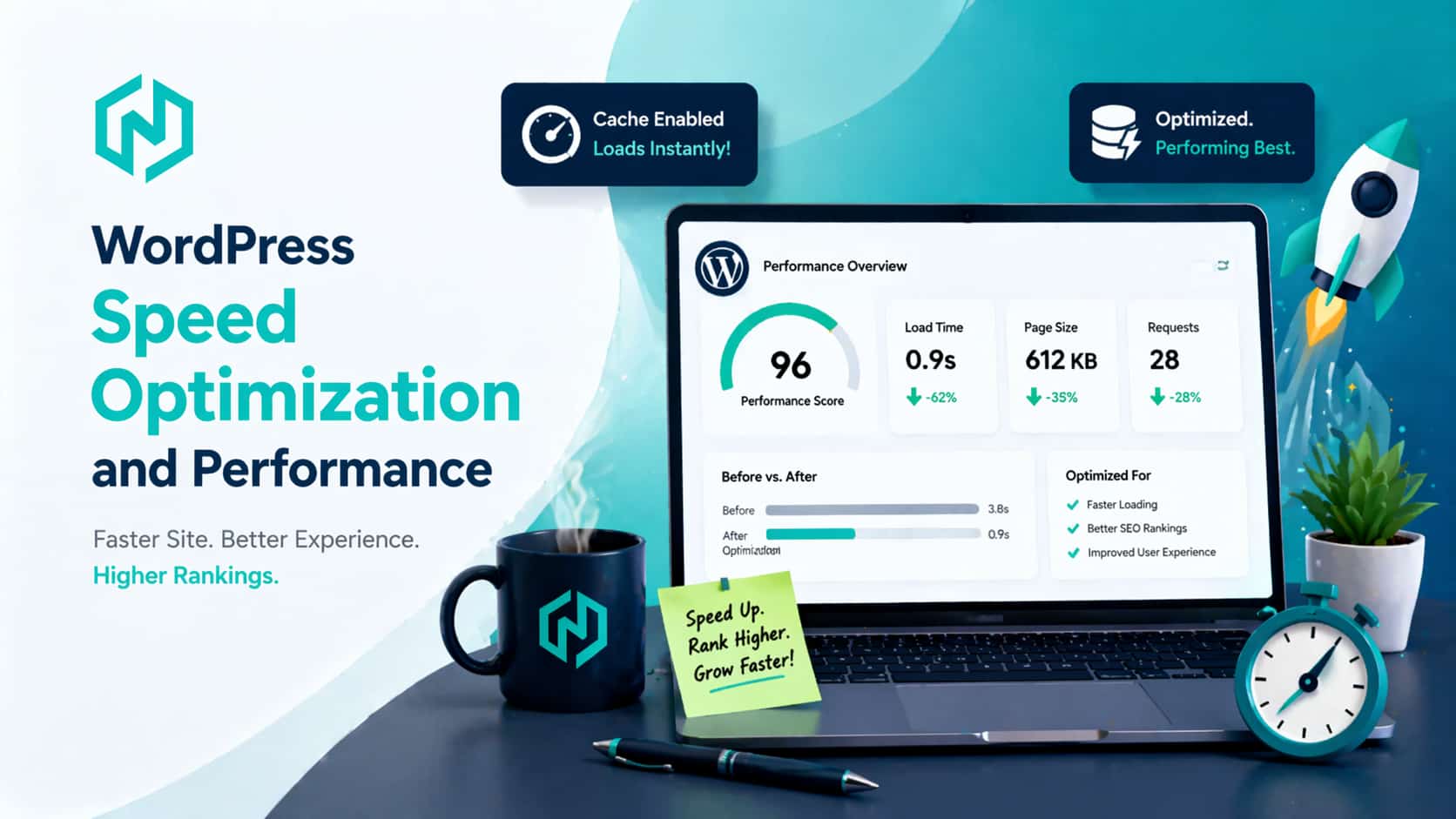
Slow websites frustrate visitors before they even read your offer. High quality development includes image optimization, lean code, performance conscious layouts, and sensible technical decisions that keep the site light and responsive.
CMS usability
A professional website should not force your team to open a support ticket every time you want to change a line of text.
Good CMS setup means your team can edit key content, publish updates, and grow the site confidently. Startups change quickly, so usability on the admin side matters almost as much as usability on the front end.
Security and reliability
A site also has to be safe.
That includes secure hosting practices, update management, spam protection, backup systems, form security, and sensible access control. Security problems damage trust fast and can become expensive very quickly.
Scalability
Startups grow. Or at least they plan to.
A high quality website development service thinks ahead. Can this site support more pages, more traffic, better tracking, future integrations, language expansion, content growth, or ecommerce later? A site built only for today often becomes a bottleneck tomorrow.
Honest process and communication
This part gets overlooked, but it matters.
A great agency explains scope clearly, defines feedback rounds, sets timelines honestly, shows what happens next, and does not hide behind vague jargon. Founders need visibility. Good communication is part of quality.
What is your process for website development and quality assurance?
A strong website process should feel clear from the first call.
If you ask an agency how they build websites and the answer is vague, overloaded with buzzwords, or focused only on design, that is a warning sign. Professional development work should follow a repeatable process that turns business needs into a tested launch.
Here is the process I would expect from a strong startup focused partner.
Step 1. Kickoff and discovery
The process starts with understanding the business, the audience, and the goal.
This includes stakeholder conversations, service or product clarity, audience pain points, competitors, technical needs, and definition of success. The goal is to remove assumptions early.
A reliable agency should leave this stage with a sharp project brief, not just inspiration.
Step 2. Strategy and architecture
Next comes planning.
The team maps pages, user flows, conversion goals, content direction, and platform choice. This is where the business decides whether it needs WordPress, Shopify, WooCommerce, or a more custom setup. It is also where growth considerations enter the process.
For many founders, this is the stage where a freelancer and a real team start to look very different. If you are comparing a solo option with a broader website development company near me, ask who owns architecture, SEO structure, testing, and launch planning.
Step 3. Wireframes and content mapping
Before polished design begins, the site is laid out in practical form.
Each major page is structured around message flow, proof, user questions, and calls to action. At the same time, the content plan is mapped so that the build supports real copy, not placeholder text that later breaks the layout.
This stage cuts rework dramatically.
Step 4. Visual design
Once the structure works, the site receives its final visual direction.
Typography, color, spacing, image style, and interface detail are refined so the brand feels credible and cohesive. The best teams do not use design to hide weak strategy. They use design to strengthen it.
Step 5. Development and integration
Approved designs are then turned into a live build environment.
During this phase, the team develops templates, sets up the CMS, connects forms, installs essential analytics, configures technical basics, and handles performance improvements. If the project requires custom logic, third party tools, or CRM integration, this is where those features are implemented.
Step 6. Quality assurance
This is the stage that separates amateurs from professionals.
QA is not one quick mobile check. It is a disciplined review of how the site behaves across devices, pages, and real user actions. A serious team works through the site methodically.
A strong QA checklist includes:
-
All links tested
-
All forms tested
-
Thank you pages and notifications verified
-
Mobile and tablet review
-
Browser compatibility review
-
Content proofreading
-
Page speed review
-
Redirects checked
-
Metadata reviewed
-
Analytics events verified
-
Image optimization checked
-
Accessibility basics reviewed
-
Security basics confirmed
-
CMS editing tested
-
Backup and rollback readiness confirmed
Step 7. Pre launch review
Before launch, the team performs a final walkthrough with the client.
This is the moment to confirm approvals, close outstanding edits, verify domain and hosting readiness, and make sure nothing important is assumed. A rushed pre launch review creates messy launches.
Step 8. Launch day execution
On launch day, the site is deployed in a controlled sequence.
The team connects the domain, verifies SSL, rechecks forms, confirms analytics, tests key pages on live servers, validates redirects, and watches for issues. A professional launch is careful, not dramatic.
Step 9. Post launch monitoring
The first days after launch matter a lot.
Even after careful QA, live traffic sometimes reveals friction. A good team monitors user behavior, form activity, speed, tracking, and page issues so the site settles smoothly into real use.
Step 10. Ongoing improvement
The best website process does not end with launch.
As traffic grows, the business learns more about user intent, conversion bottlenecks, and content opportunities. Pages can be expanded, headlines refined, internal linking improved, and new landing pages created based on actual performance.
That is why the best websites are not built once. They are built, tested, learned from, and improved.
Conclusion
Choosing the right website matters because your site is rarely just a design asset. For a startup, it is part of how you win trust, generate enquiries, support search visibility, and move people toward action.
A professional website development process gives you more than a finished design. It gives you structure, clarity, better decisions, cleaner launches, and fewer expensive mistakes. That is what separates a website that simply exists from one that actually helps the business grow.
If you want the most practical option for startups, NxTechNova stands out because it combines web development with the wider systems that modern businesses actually need. So if you are evaluating a website design and development company near me or planning custom wordpress website development, it is a smart place to start.