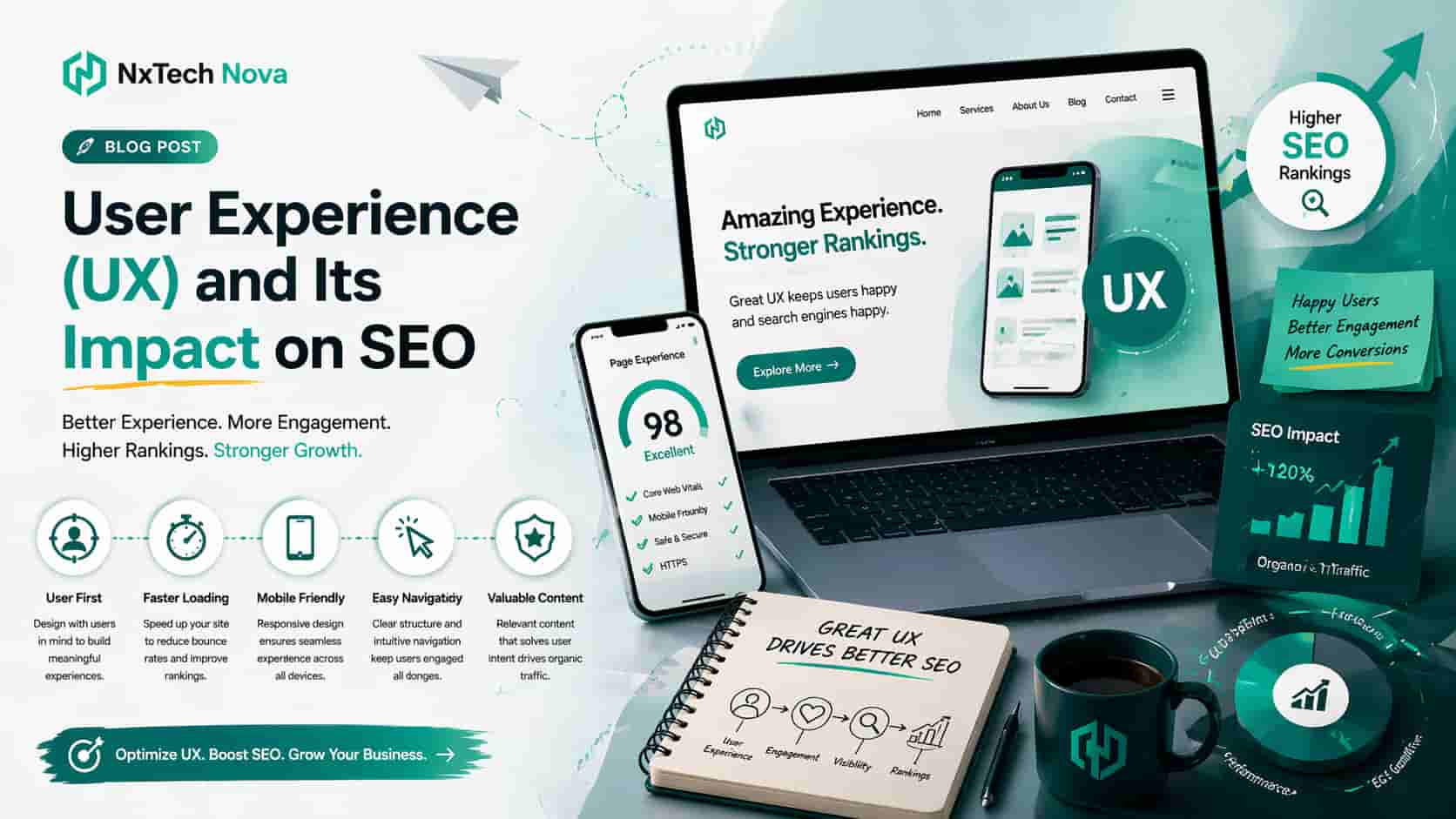
What is User Experience (UX) and why does design matter so much to SEO?
A few weeks ago, imagine someone searching for a service on their phone during a short lunch break. They tap a result that looks promising. The page opens slowly. The text is cramped. Buttons sit too close together. A pop up covers the screen before they even read the first sentence. Within seconds, they leave and choose another result.
That is user experience in action.
It is not just about how pretty a website looks. It is about how easily a person can use your site, understand your content, trust your message, and take the next step without friction. UX is the full feeling a visitor gets from the moment they land on your page until the moment they leave, convert, or come back again.
When people talk about SEO, many still think only about keywords, backlinks, and title tags. Those things matter. But they are only part of the picture. Search engines want to recommend pages that help users quickly and clearly. That means design, structure, speed, layout, readability, and interaction all matter a lot more than they used to.
A page can have excellent keyword targeting and still perform poorly if the experience is frustrating. In the same way, a beautifully designed site can struggle if the content is unclear and the page structure does not match search intent. Strong SEO today lives where usability and relevance meet.
This is why design matters so much to SEO.
A good design does not only make a site look professional. It helps users do what they came to do. That may include:
-
Finding an answer quickly
-
Comparing options with confidence
-
Reading without strain
-
Navigating without confusion
-
Filling out a form without frustration
-
Trusting the brand enough to take action
When that happens, your website sends stronger quality signals. Visitors stay longer. They engage more deeply. They move to the next page. They are more likely to remember your brand, return later, or convert on the same visit.
That is the real connection between UX and SEO.
It is also where many businesses get confused. They invest in rankings but ignore page experience. Or they invest in redesigns without thinking about search intent. The result is a site that looks polished but still fails to perform. If you want sustainable growth, the smarter move is to connect the two.
This is where businesses often start looking for a website development company near me that understands more than visuals. They need a team that can shape layout, speed, content structure, mobile usability, and search visibility together instead of treating them as separate projects.
UX also shapes the first impression of trust. If your site feels outdated, cluttered, hard to navigate, or unreliable, users hesitate. Search engines are getting better at recognising which pages truly satisfy searchers. So while good design alone will not rank a page, poor design can quietly damage almost every result you care about.
To understand that better, it helps to look at the practical relationship between SEO and UX from the ground up.
S1: In what ways does SEO contribute to a better user experience?
A lot of people think SEO is only for search engines. In reality, good SEO often improves the experience for real humans first.
At its best, SEO is about matching the right page to the right search at the right moment. That process naturally pushes businesses to create clearer, faster, and more helpful websites. When done properly, SEO improves structure, relevance, accessibility, and ease of use. All of these are UX wins.
Here is how that happens in practical terms.
SEO improves content relevance
The first job of SEO is understanding what users are actually searching for. That means search intent becomes central. A page targeting an informational query should teach. A service page should guide and persuade. A product page should make comparison and decision making easier.
When SEO aligns content with intent, users do not feel lost. They land on the page they expected. The headline makes sense. The next step feels obvious. That creates a smoother experience and reduces frustration.
SEO improves page structure
Well optimised pages usually have a clearer structure. They use logical headings, short paragraphs, useful subheadings, and a natural flow from one point to the next. That makes content easier to scan, especially on mobile.
A user should never feel like they have entered a wall of text with no direction. Strong SEO encourages page organisation that helps both readers and crawlers understand the topic quickly.
SEO improves navigation
Search engines want to understand how your content fits together. That is why internal linking, clean menus, and logical site architecture matter. But these same elements also help users move around the site without getting stuck.
A visitor who lands on one blog post should be able to discover related services, supporting articles, and the next useful step without needing to search again. That is a better user journey.
This is one reason businesses invest in seo services near me instead of treating SEO as keyword placement alone. Good SEO helps build a site that feels organised, purposeful, and easy to use.
SEO pushes websites to load faster
Page speed is not only a technical issue. It is a user patience issue.
If a page takes too long to load, the experience starts badly before the content even appears. Technical SEO often includes improving image sizes, code efficiency, mobile performance, and core page loading behaviour. That directly benefits the user.
Fast websites feel more trustworthy. They reduce drop off. They create momentum. They help visitors stay focused on the task rather than waiting for the site to catch up.
SEO improves mobile usability
Most searches now happen on mobile devices. SEO work today often includes mobile first thinking, responsive layout checks, touch friendly design, and readable spacing. These changes make sites easier to use for real people in real situations.
Someone may be searching while commuting, walking into a meeting, or browsing late at night from bed. If your mobile experience is poor, even great content may go unread.
SEO encourages clear information hierarchy
Titles, headings, meta descriptions, and supporting copy are all part of SEO. But they also shape the way users understand a page. Clear hierarchy tells the reader what matters first, what comes next, and where they should focus.
Without that hierarchy, people work harder to understand your message. When users have to work too hard, they leave.
SEO helps answer questions completely
Thin content creates a weak experience. Users click, skim, and realise the page does not really help them. Strong SEO encourages content depth. It pushes pages to answer supporting questions, address objections, and provide context around the main topic.
That does not mean stuffing pages with filler. It means covering the topic in a way that leaves fewer gaps for the user.
SEO improves accessibility and readability
While accessibility is broader than SEO, there is meaningful overlap. Descriptive headings, image context, structured content, readable typography, and clear anchor paths all make a page easier to use for more people.
When content is easier to read and interact with, satisfaction improves.
In short, SEO contributes to better UX because it asks the same question a smart designer asks.
What is this person trying to do, and how can we help them do it faster and with more confidence?
That is also why businesses that want stronger search performance often benefit from expert content marketing instead of publishing random articles. Content should not just bring traffic. It should guide users clearly, support intent, and move them naturally toward trust and action.
The best SEO is not manipulative. It is clarifying. It makes your site easier to discover, easier to understand, and easier to use. That is why the link between SEO and user experience is not optional anymore. It is built into the way modern websites win.
S2: What is the importance of user experience in on-page SEO today?
User experience has become one of the most important layers of on page SEO because search competition is no longer just about who used the keyword best. It is about who serves the visitor best once they arrive.
Years ago, many pages ranked because they were simply more optimised than the alternatives. Today, that is not enough. Many industries now have dozens of pages targeting the same terms with similar information. When content quality starts to look equal, experience becomes the difference maker.
That is why UX matters so much in on page SEO today.
On page SEO covers the elements users interact with directly on a page. That includes the title, headings, text layout, internal links, visuals, trust signals, page speed, mobile design, calls to action, and the overall clarity of the content. Every one of these shapes how a user feels and behaves.
If the page is hard to read, too aggressive, too cluttered, or too vague, users lose patience. If the page is clean, fast, clear, and useful, users are far more likely to stay engaged.
Here are some of the biggest reasons UX now sits at the centre of on page SEO.
Search engines want satisfied users
Search engines only keep their market trust if they send people to pages that solve problems well. That means pages need more than keyword relevance. They need actual usefulness.
A page that ranks but disappoints users creates a bad search experience. A page that ranks and delivers value strengthens search trust. That is why user satisfaction matters.
Content must be easy to consume
A page can contain the right information and still fail because the format is exhausting. Long dense paragraphs, weak spacing, unclear headings, and poor layout make useful content feel difficult.
Good UX breaks complexity into digestible pieces. It helps the reader move from question to answer without friction. This is especially important for blogs, service pages, and product explainers where users want both depth and clarity.
Trust begins on the page itself
Trust is not only built through reviews or authority mentions. It starts with the page experience.
Users notice things like:
-
Whether the layout feels modern and professional
-
Whether the copy feels clear and credible
-
Whether the page loads properly on mobile
-
Whether the next step feels safe and obvious
-
Whether the site looks consistent and maintained
If these signals feel weak, the page may lose trust before the visitor even evaluates the offer.
UX reduces pogo behaviour
When users click a result, glance at the page, and quickly return to search, that is usually a sign the page failed to satisfy them. It may be the wrong answer, a poor experience, or both.
Strong UX helps prevent this by confirming relevance fast. The headline matches the query. The introduction answers the immediate question. The design reassures the user that they are in the right place.
On page SEO now overlaps with conversion thinking
Modern SEO cannot stop at traffic. A page should bring the right visitors and help them move forward. That means UX and conversion strategy now work closely with on page optimisation.
For example, a well optimised page should do all of the following:
-
Match the search intent clearly
-
Make the core answer visible early
-
Keep the content easy to scan
-
Build trust as the user reads
-
Lead naturally toward the next action
That is not just SEO. That is smart page design.
This is where businesses often start searching for content marketing services near me because great on page SEO is not just about inserting keywords. It is about creating pages that hold attention, build confidence, and support the full user journey from discovery to decision.
UX helps every type of visitor
Not every visitor arrives ready to buy. Some want information. Some want reassurance. Some are comparing providers. Some only want one quick answer. Strong UX respects these different states.
A good page supports beginners without boring advanced users. It gives enough detail to build authority, while staying clear enough to remain readable. That balance matters more today because search traffic is more mixed, more impatient, and more mobile than ever.
Good UX makes your SEO more durable
Short term ranking tricks fade. Helpful pages last longer.
When your page is built around clarity, usefulness, speed, and trust, it tends to age better. It is easier to update, easier to expand, and more likely to keep serving real user needs even as algorithms shift.
That is one of the biggest hidden benefits of UX focused SEO. It makes your website more resilient.
So the importance of user experience in on page SEO today is simple. It turns a technically visible page into a genuinely effective page. It helps your rankings work harder by ensuring the traffic you earn actually finds value when it arrives.
Without good UX, even strong SEO can feel wasted.
S3: How does user engagement influence your organic SEO rankings?
User engagement influences organic SEO rankings by revealing whether your page is actually connecting with the people it attracts.
This topic is often misunderstood. Many people reduce it to one number like bounce rate and assume that number directly controls rankings. That is too simplistic. Search performance does not work like a single switch. Engagement matters because it reflects satisfaction, alignment, and usefulness across the full user journey.
When users engage well with a page, several positive things often happen at once. They stay longer. They scroll further. They click deeper into the site. They read more carefully. They return later. They may even search for your brand again in the future.
All of these behaviours suggest that the page delivered value.
That matters because the goal of organic search is not just to generate clicks. It is to connect searchers with results that genuinely help them. Pages that do this consistently tend to perform better over time because they meet intent more effectively.
Let’s look at how engagement influences organic SEO in real world terms.
Engagement confirms intent match
The first question after a click is whether the page matches what the user expected. If someone searches for an answer and the page immediately feels relevant, they are more likely to stay.
That first moment is critical. A clear title, strong introduction, clean layout, and visible relevance help the page win the second click, which is really the decision to keep reading.
If users keep landing on your page and quickly leaving, that usually points to a mismatch. Either the content is not answering the query well enough, or the page experience is making the answer harder to access.
Engagement improves content momentum
A page that keeps readers moving creates flow. They read one section, then the next. They explore related pages. They click supporting links. They spend meaningful time with the brand.
This does not just improve user experience. It strengthens the overall value of the session. The site stops being a single page and starts feeling like a useful resource.
That is why businesses looking for integrated growth do not only ask who can rank a page. They start asking which team acts like the best digital marketing agency near me by connecting content, design, search visibility, and conversion into one joined up system.
Engagement builds brand trust
Search engines may bring the first visit, but engagement helps determine whether that visit becomes a relationship.
When users stay, explore, and return, they are not just consuming content. They are building familiarity. They begin to recognise the brand as credible, useful, and worth revisiting. Over time, that can lead to stronger branded searches, more direct visits, and more natural sharing.
These patterns support long term SEO strength because they move the site beyond generic discoverability and into remembered value.
Engagement helps surface weak pages
One of the practical reasons engagement matters is that it helps you identify pages that are underperforming even if they already get traffic.
A page may rank well and still disappoint users. When engagement is weak, it often points to a fixable issue such as:
-
Slow load speed
-
Weak introduction
-
Poor mobile layout
-
Confusing page structure
-
Thin information
-
Unclear call to action
-
Mismatch between keyword and content
This is useful because it turns SEO into a feedback loop. Engagement shows you where the experience is breaking down.
Strong engagement supports better business outcomes
Organic traffic means little if it does not lead anywhere meaningful. When users engage well, they are more likely to:
-
Join an email list
-
Read another article
-
View a service page
-
Request a quote
-
Fill in a contact form
-
Return later with stronger buying intent
That is why engagement is not just an SEO concept. It is a business growth signal.
Engagement is influenced by page design
A visitor rarely thinks in technical terms. They do not say, this page has poor visual hierarchy. They simply feel friction and leave. Or they feel ease and stay.
Design decisions shape engagement more than many marketers realise. White space, font size, image balance, heading placement, CTA flow, trust sections, and mobile spacing all influence whether the user keeps moving.
That is why SEO teams that ignore design often hit a ceiling. Rankings may come, but engagement stays flat.
So yes, user engagement does influence organic SEO rankings, not as a magic metric, but as a reflection of how well your page serves the visitor. Search visibility gets the click. User experience earns the stay. Together, they create the kind of page performance that grows over time instead of fading after a brief ranking spike.
S4: What role do user engagement metrics play in on-page SEO?
User engagement metrics play the role of evidence. They show how real people respond to your page after they arrive. In on page SEO, that makes them incredibly valuable.
They are not useful because they act like a shortcut ranking formula. They are useful because they help you understand whether your content and design are doing their job.
A page might look fine to the team that built it. But users tell the truth through behaviour. If they stop early, hesitate, ignore the CTA, or leave without exploring, the page is saying something important. Engagement metrics help you hear it.
Here are the main ways these metrics help on page SEO.
They reveal whether the introduction is working
The opening section of any page carries a huge burden. It must reassure the visitor quickly. It must confirm relevance. It must make the page feel worth reading.
If users leave early, the problem is often near the top. The title may overpromise. The intro may feel vague. The layout may look difficult. The first screen may lack clarity.
Looking at early drop off signals can help you improve the most important part of the page first.
They show whether the content is easy to consume
Scroll depth, time on page, and interaction flow help reveal whether the content is readable and engaging. If users only skim the first section and disappear, something may be blocking momentum.
Common reasons include:
-
The paragraphs are too dense
-
The headings are weak or repetitive
-
The page looks cluttered
-
The content does not answer the query fast enough
-
The structure feels harder than the topic deserves
In on page SEO, readability is not a cosmetic detail. It directly affects whether the value of the content is ever fully experienced.
They help diagnose intent mismatch
If a page ranks for the wrong terms, engagement usually suffers. Users arrive expecting one thing and find another. Metrics can expose this problem faster than assumptions can.
For example, if a service page is attracting informational traffic but not converting, the query mix may be too broad. If a blog is drawing commercial intent visitors but not guiding them onward, the internal journey may be too weak.
This is where combining analytics with page level SEO review becomes powerful.
They improve internal linking strategy
Pages do not rank or convert in isolation. Good on page SEO includes guiding people to the next useful page. Engagement metrics help you see whether those pathways are being used.
If related page clicks are low, the issue may be:
-
Weak anchor placement
-
Low relevance between linked pages
-
Poor visual emphasis
-
Lack of trust before the link appears
-
No logical next step in the copy
When internal links are well placed, they feel helpful, not forced.
That is also why some businesses explore digital marketing consulting near me instead of treating content, analytics, and conversion as separate tasks. The best page improvements come from seeing how all three interact.
They help shape better calls to action
On page SEO should not end with a pageview. A strong page should help the visitor progress. Engagement metrics around CTA clicks, form starts, form completions, and button interaction can show whether the page is building enough trust before asking for action.
If traffic is strong but conversions are weak, the issue may not be traffic quality. It may be page experience.
You may need to improve:
-
The order of information
-
Trust signals before the CTA
-
The simplicity of the form
-
The clarity of the offer
-
The relevance of the CTA to the visitor stage
They help prioritise updates
Not every page needs a full rewrite. Engagement metrics help you focus effort where it matters most.
A practical on page SEO improvement process often looks like this:
-
Identify pages with traffic but weak engagement
-
Review search intent and page promise
-
Improve the first screen experience
-
Strengthen headings and content flow
-
Add clearer internal paths
-
Refine the CTA based on user stage
-
Measure the result after changes
This approach is far stronger than updating pages blindly.
They connect SEO with actual outcomes
The biggest value of engagement metrics is that they connect rankings with reality. A page that ranks but does not get read is underperforming. A page that gets read but does not guide action is incomplete. A page that earns traffic, attention, trust, and conversion is doing its full job.
That is the real role of engagement metrics in on page SEO. They help you measure whether the page is merely visible or genuinely effective.
Many businesses also discover that content performance improves when it is supported by content marketing services near me that focus on structure, intent, and user flow instead of publishing for volume alone. Better content does not just say more. It guides better.
When you treat user engagement metrics as clues rather than vanity numbers, they become one of the most practical tools in modern SEO.
S5: How can on-page SEO increase your website conversion rates?
On page SEO increases website conversion rates by bringing the right visitors to the right page and then making it easier for them to act.
This is one of the most important points many blogs miss. They talk about rankings and traffic as if the job ends there. It does not. Real business growth happens when visibility leads to action. That is where on page SEO becomes much more than keyword optimisation.
A well optimised page does not just help search engines understand the topic. It helps the visitor understand the value, trust the offer, and move forward with less hesitation.
That is how conversions increase.
On page SEO attracts better fit traffic
Conversion starts before the user even lands on your site. If your title, meta description, and page topic match the right intent, you attract visitors who are already closer to the action you want.
A page targeting broad curiosity may bring traffic but weak conversions. A page targeting a more precise need often brings fewer clicks but better results. Good on page SEO helps align the page with meaningful intent instead of chasing empty volume.
On page SEO improves message clarity
Many websites lose conversions because users cannot quickly tell what the page offers, who it helps, or what to do next.
On page SEO forces clarity. It encourages better headlines, more focused subheadings, stronger topical relevance, and more structured information. This reduces confusion and helps visitors understand the value faster.
Clarity converts.
On page SEO builds trust before the ask
People do not convert because they saw a button. They convert because the page made them feel confident enough to click it.
That confidence is built through:
-
Relevant and helpful content
-
Clear structure
-
Consistent design
-
Credible tone
-
Proof and reassurance
-
Smooth mobile experience
-
Visible next steps
If your page answers the right questions in the right order, the CTA feels natural instead of pushy.
This is where businesses that want both rankings and revenue often look for seo services near me that understand conversion focused page design rather than SEO in isolation.
On page SEO reduces friction
Every conversion path has friction points. These include slow load speed, vague messaging, long forms, weak trust signals, poor mobile layout, and unclear CTAs.
On page SEO helps identify and reduce these problems because it looks closely at how the page is structured and how users move through it.
The less resistance a user feels, the more likely they are to continue.
On page SEO supports the buyer journey
Not every visitor is ready to buy immediately. Some need education first. Some need comparison. Some need reassurance. On page SEO helps by creating pages that support each stage of this process.
For example:
-
A blog post captures informational intent
-
Internal links guide the reader to a relevant service
-
The service page builds trust and explains the offer
-
The CTA gives a low friction next step
That flow matters because conversion is often a journey, not a single moment.
On page SEO strengthens the page to CTA relationship
A common mistake is placing calls to action on pages that have not earned them yet. The reader has not been informed enough, reassured enough, or guided enough.
Strong on page SEO fixes this by improving narrative flow. The page answers the primary question first. Then it adds context. Then it resolves objections. Then it offers the next step.
When that happens, CTAs work better because they appear at the point of highest relevance.
If you are improving pages across multiple channels, this same principle also helps with social media marketing services near me because traffic from social campaigns also lands on pages that need clarity, speed, and trust to convert. Good UX does not only help organic visitors. It improves performance across channels.
Practical on page SEO elements that improve conversions
Here are some of the most effective page elements for turning SEO traffic into action:
-
A headline that matches the search intent clearly
-
A first paragraph that reassures the visitor immediately
-
Short readable paragraphs with clear subheadings
-
Service benefits explained in plain language
-
Trust builders such as process clarity, proof, or common questions
-
Strong internal links to the next logical page
-
A simple CTA that fits the stage of the reader
-
Mobile friendly design with obvious buttons
-
Fast load speed and low visual clutter
None of these elements are flashy. But together they change results.
Content depth also supports conversion
Thin pages rarely convert well because they leave too many unanswered questions. The user still feels uncertain. They do not know enough about the offer, the process, the outcome, or the brand.
Good on page SEO improves depth without making the page heavy. It helps you include the right detail at the right moment. That may involve explaining how a service works, who it is best for, what common mistakes to avoid, and what happens after the user contacts you.
That kind of content turns hesitation into confidence.
Conversion rates improve when SEO and design work together
This is the biggest lesson behind the whole topic. SEO brings the visitor. UX shapes the experience. Conversion happens when those two support each other.
If the SEO is strong but the page is frustrating, conversions stay low. If the design is attractive but the search intent is wrong, the traffic does not fit. The best results come from aligning both.
That is why businesses that want full funnel performance often move beyond scattered fixes and start comparing partners the way they would compare the best digital marketing agency near me. They need strategy, content, page experience, and search performance working together, not competing with each other.
A simple way to think about it
If you want on page SEO to increase conversions, ask these five questions about every important page:
-
Does this page attract the right kind of visitor
-
Does the first screen confirm they are in the right place
-
Is the content easy to scan and trust
-
Does the page answer the key questions before asking for action
-
Is the next step obvious and easy
If the answer to any of these is no, the page has room to improve.
That is why on page SEO matters so much. It is not only about ranking pages. It is about making every visit more valuable. More clarity. More engagement. More trust. More action.
Conclusion
User experience and SEO are no longer separate conversations. A website that is hard to use will struggle to rank well over time, and a website that ranks well but frustrates users will struggle to convert. The real win comes when search visibility, page structure, trust, and usability all work together.
If you want better rankings, stronger engagement, and more conversions from the traffic you already have, improving UX is not optional. It is one of the smartest SEO moves you can make. And if you are ready to work with a team that connects strategy, design, content, and search performance properly, start by exploring what Nxtechnova offers as a best digital marketing agency near me