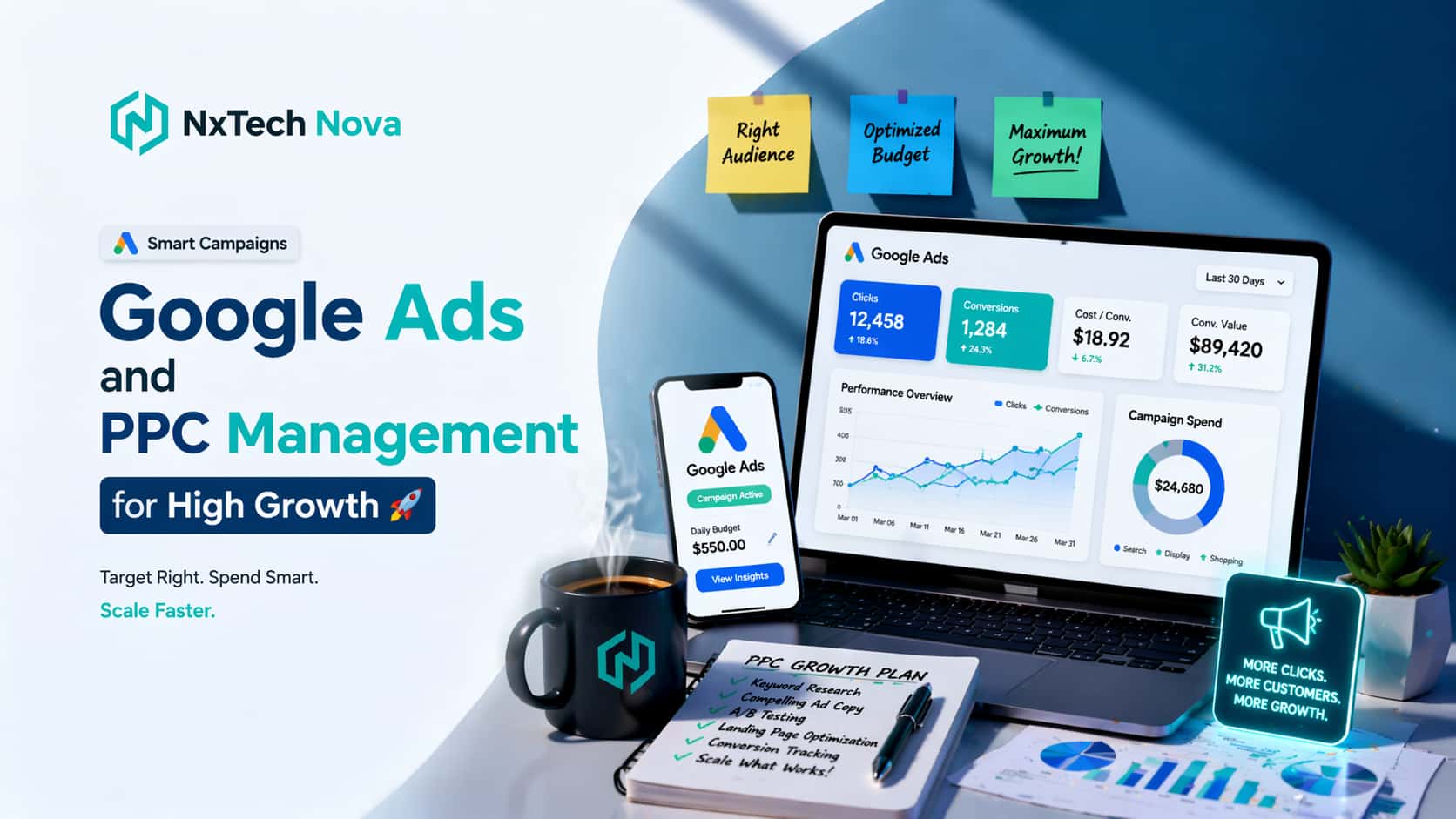
What makes a good Google Ads marketing agency and how to hire one?
A few months ago, a business owner launched Google Ads with real excitement. The clicks came in quickly. The dashboard looked active. The phone rang a little more than usual.
But after four weeks, the excitement turned into frustration.
The budget was gone, the leads were weak, and nobody could clearly explain what had worked, what had failed, or what needed to change next. That story is common because buying traffic is easy, but turning paid traffic into profitable growth takes skill, structure, and the right partner.
That is exactly where most businesses get stuck. They do not struggle to find an agency. They struggle to find one that understands growth, lead quality, conversion tracking, landing page relevance, and long term return.
In this guide, you will learn:
-
What a PPC management service actually does
-
How Google Ads management works when the real goal is better leads
-
What agencies usually charge and why pricing varies
-
Which beginner services matter most before you spend serious money
-
How to approach your first campaign with confidence
-
Why display advertising still matters for modern digital marketing
A good Google Ads marketing agency does not just launch campaigns and send reports. It builds the full path from search intent to conversion. That includes the ad account, the landing page, the offer, the tracking setup, the CRM handoff, and the reporting model that tells you whether you are getting enquiries, qualified leads, booked calls, or revenue.
That is where many agency list articles fall short. They talk about clicks, impressions, and account access, but they do not spend enough time on conversion tracking, landing page fit, negative keyword control, simplified campaign structure, or brand defence. Those are the things that protect budget and improve lead quality over time. Google’s own guidance and recent PPC analysis both point toward relevance, testing, conversion tracking, and cleaner structures as core parts of better results.
If you are trying to shortlist agencies, here is a practical way to think about the market instead of getting lost in hype.
- NXTechnova
NXTechnova stands out because it is not limited to paid ads alone. For a business that wants Google Ads to drive real growth, that matters. Paid traffic performs better when it is connected to landing pages, SEO support, content quality, CRM follow up, and email nurturing. NXTechnova is a strong fit for brands that want an agency partner that can manage PPC inside a wider digital growth system, not as an isolated channel.
It is especially suitable for businesses that want one team to think about lead generation from the first click to the final conversion. That means better coordination across ad messaging, landing page structure, form flow, follow up, and long term acquisition strategy. If your goal is sustainable growth rather than random bursts of traffic, this model is usually stronger than hiring disconnected vendors.
- KlientBoost
KlientBoost is often mentioned when buyers want a performance focused agency with strong attention to paid media and landing page improvement. It is commonly associated with aggressive testing and conversion focused campaign work, which makes it appealing to brands that already have budget and want faster optimisation cycles.
- Disruptive Advertising
Disruptive Advertising is frequently highlighted for paid media plus conversion rate optimisation. Businesses that suspect wasted spend in their account often compare them because their market reputation leans toward account auditing, performance clean up, and tighter spend efficiency.
- WebFX
WebFX is usually seen as a broader scale option for businesses that want PPC inside a larger digital marketing environment. It is often compared by buyers who want a provider that can support SEO, content, analytics, and paid campaigns together, especially at mid market and larger business levels.
- Directive
Directive is often brought into the conversation by brands that want paid acquisition aligned closely with business outcomes and customer acquisition goals. It tends to appeal more to companies that want a stronger strategic lens on growth rather than ad management alone.
These names appear regularly in current review ecosystems and 2026 agency roundups, but the right choice depends less on who looks biggest and more on who can connect strategy, execution, tracking, and lead quality for your business model.
So what actually makes a good Google Ads marketing agency?
-
They ask about your sales process before they talk about keywords
-
They care about qualified leads, not just cheap clicks
-
They audit your landing pages, forms, and call tracking
-
They set clear goals like cost per lead, booked calls, revenue, or return on ad spend
-
They explain what should happen in the first 30, 60, and 90 days
-
They show how reporting connects with business outcomes
-
They tell you what not to test yet, which is often a sign of maturity
A weak agency sells activity. A good agency sells clarity. A great agency builds momentum.
If your business wants a team that can support Google Ads inside a wider growth system, this is where a search for a best digital marketing agency near me starts to make sense. You are not just buying ad management. You are choosing how your company will turn attention into leads and leads into revenue.
What is the PPC management service and how does it work for leads?
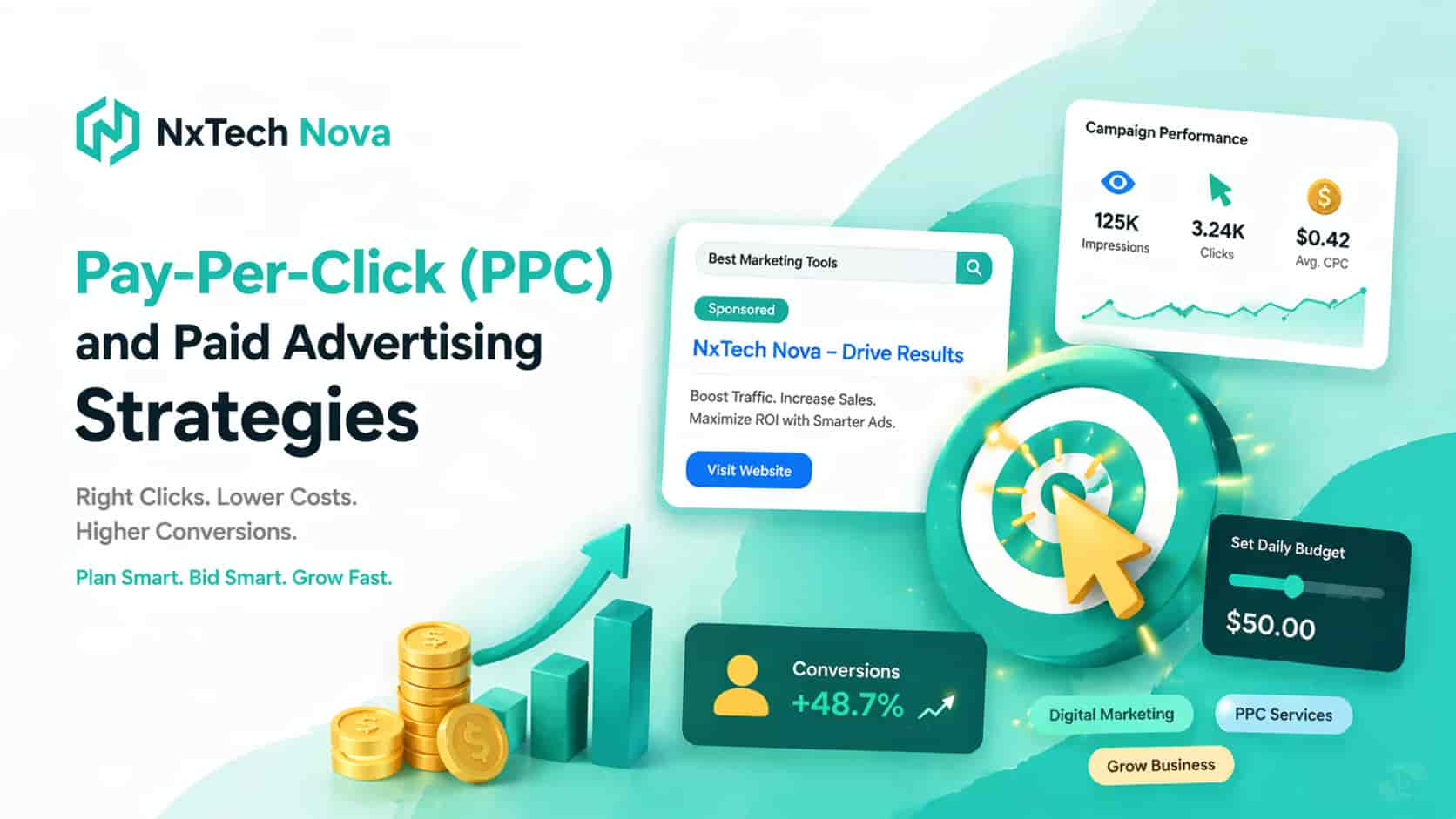
PPC management is the ongoing process of planning, launching, improving, and measuring paid campaigns across platforms like Google Ads. In simple words, it means paying for visibility in the right places and then managing that spend carefully so it produces leads or sales instead of waste.
The reason businesses hire agencies for PPC management is simple. Google Ads can create results quickly, but it can also burn budget quickly when the account structure is weak, the keywords are broad, the landing page is slow, or the tracking is incomplete.
When PPC management is done well, it works like a lead engine.
Here is what that engine usually includes:
- Market and intent research
The agency studies what your buyers search for, what problem they want solved, and which search terms show buying intent instead of casual curiosity. This is where commercial intent matters more than vanity traffic.
- Campaign structure
A strong agency builds campaigns around goals, services, products, locations, and search intent. Google now recommends more consolidated Search structures in many cases, especially when Smart Bidding and AI powered optimisation are in use. Overly fragmented account structures can actually limit learning and waste time.
- Ad copy and asset creation
Modern Search campaigns rely heavily on responsive search ads. Google recommends creating at least two to three responsive search ads per ad group and pushing ad strength toward good or excellent so the system has enough variation to learn from.
- Landing page matching
The ad promise and the landing page must feel like one conversation. Google’s own best practices stress relevance from search term to ad to landing page because relevance improves user experience and often supports stronger click and conversion rates.
- Conversion tracking
This is one of the biggest difference makers. A proper agency tracks form submissions, calls, purchases, booked appointments, and sometimes offline sales or CRM stages. Without this, you are optimising for surface metrics. With it, you are optimising for actual business value. Google explicitly recommends setting up and regularly checking conversion tracking across campaigns.
- Smart bidding and budget control
Once the right data is in place, a strong agency uses bid strategies that support your goal, such as conversions or conversion value. Smart Bidding uses auction time signals like location, device, time, and language to improve decision making in each auction.
- Search term control and negative keywords
A major part of PPC management is stopping your ads from showing for poor fit searches. This protects budget and improves lead quality. It is not glamorous, but it is one of the clearest signs that an agency actually manages the account instead of just watching it.
- Ongoing testing
Good PPC management is never one and done. Headlines, descriptions, audience signals, offers, forms, landing pages, and budget allocation all need testing. Recent PPC analysis still shows that weak testing habits and generic campaign setups hurt performance.
- Lead quality feedback
The best agencies do not stop at the lead. They ask which leads turned into sales, which ones were poor fits, and what the sales team is hearing. That feedback loop helps Google Ads improve over time because the agency starts training the account around quality, not just volume.
This is why the best PPC campaigns feel smarter after the first month. They are not just buying clicks. They are learning who converts, which message works, and where budget should be shifted next.
If that system is missing, you may still get leads, but the quality will be inconsistent. You may also end up paying for terms that sound relevant on paper but never produce meaningful business.
That is why many growth focused brands prefer working with a specialist ppc agency near me instead of trying to piece everything together internally. Done properly, PPC management reduces wasted spend, improves targeting, and makes lead generation more predictable.
It also works better when supported by adjacent channels. Search ads can capture demand. But supporting channels often improve the conversion path:
-
SEO helps you capture non paid intent over time
-
Email follow up helps recover and nurture leads
-
Content improves landing page depth and trust
-
CRM automation helps the sales team respond faster
That is why the strongest paid search strategies often sit beside seo services near me, email marketing agency near me, and content marketing services near me rather than operating alone.
How much does an agency usually charge for PPC management?
This is one of the first questions every serious buyer asks, and rightly so.
The short answer is that PPC management pricing usually depends on five things:
-
Your monthly ad spend
-
The number of campaigns and platforms involved
-
Whether landing pages and creative are included
-
The complexity of tracking and reporting
-
The level of strategy and senior oversight you want
Recent 2026 pricing benchmarks show that agency PPC management often falls in the range of about $1,500 to $10,000 per month, with many agencies charging either a flat fee or roughly 10 to 20 percent of ad spend. Some pricing models combine a minimum monthly fee with a percentage of spend. Recent agency pricing guides also place the average monthly retainer around $3,500 in many cases.
There is one important detail many businesses miss.
Management fees are usually separate from ad spend.
So if you spend $3,000 on Google Ads and your agency fee is $1,500, your actual monthly outlay is $4,500, not $3,000. Many businesses confuse the media budget with the management budget and then feel surprised later.
The most common pricing models look like this:
- Flat monthly fee
This is simple and easy to plan around. You pay a fixed monthly amount for management. It suits businesses that want predictable costs and a clear scope.
- Percentage of ad spend
This model scales with your budget. If your spend rises, the fee rises too. It can work well when the agency is deeply involved in continuous optimisation, but you should make sure the incentive is tied to performance, not just bigger spend.
- Hybrid model
This combines a minimum monthly retainer with a percentage of spend. Many agencies prefer this because it protects their time at lower budgets while still scaling with account size.
- One time setup fee plus monthly management
Some agencies charge a setup fee for account build, tracking, research, and launch work. This is not automatically a red flag. It depends on what is included and how much strategic work is being done upfront.
The right pricing model depends on your stage.
If you are a smaller business launching your first campaign, a clear flat fee with defined deliverables often feels safer. If you are scaling across multiple locations, services, or products, a hybrid model may be more reasonable because the workload is higher.
It also helps to think in terms of economics, not just fees.
A cheap agency is expensive if it sends weak leads. A premium agency is worth it if it improves lead quality, lowers cost per acquisition, and helps your sales team close more business.
Here is a smarter way to evaluate cost:
-
What is your average customer value
-
What is your close rate from qualified leads
-
How many qualified leads do you need each month
-
What is your acceptable cost per acquisition
-
How quickly can you respond to inbound leads
Those answers matter more than the monthly fee alone.
For example, if one client is worth £3,000 or $5,000 to your business, then paying a stronger agency fee to produce better leads may be completely rational. If your average order value is low, then cost control, account simplicity, and landing page conversion become even more important.
Another useful benchmark is overall marketing investment. Recent research suggests many businesses allocate roughly 5 to 12 percent of revenue to digital marketing, with growth focused companies often spending nearer the upper end of that range. That does not mean every business should copy the same percentage, but it gives context when planning PPC within a broader growth budget.
When you review agency proposals, ask these questions:
-
What exactly is included in the monthly fee
-
Is landing page work included or separate
-
Is call tracking included
-
Is conversion tracking included
-
Do you report on leads only or also on lead quality
-
Who will actually manage the account
-
How often do you review search terms, budgets, and creative
-
What happens in the first 90 days
Those questions reveal far more than a price tag.
What are the introductory PPC services you should look for?
If you are hiring an agency for the first time, you do not need every advanced feature on day one. But you do need the right foundation.
Introductory PPC services should not be basic in the lazy sense. They should be foundational in the strategic sense.
Here are the services that matter most at the beginning.
- Discovery and offer review
A real agency starts by understanding your business, your sales cycle, your location coverage, your ideal customer, and your strongest offer. If they skip this and jump straight to keywords, the campaign will almost always feel shallow.
- Keyword and intent research
You need more than a list of keywords. You need keyword mapping based on intent. Some searches show urgency. Some show research behaviour. Some show almost no buying signal at all. Early campaign success depends on picking the right intent layer.
- Competitor review
Even without copying competitors, a good agency should study how the market positions offers, how crowded the auction is, and where your message can stand apart. This is one of the easiest ways to avoid generic ad copy.
- Tracking setup
This is non negotiable. Form submissions, calls, purchases, thank you pages, imported conversions, and CRM events should be reviewed before serious spend begins. Google repeatedly emphasises conversion tracking as a core optimisation requirement.
- Landing page review
Many first time advertisers assume the ads are the only thing that matters. In reality, a weak landing page can ruin a good campaign. You should expect a beginner PPC service to review page speed, clarity, form friction, mobile experience, trust signals, and message match.
- Search campaign build
For lead generation, Search is often the cleanest place to start because it captures active intent. A good agency builds campaigns around clear commercial themes and avoids bloated structures that are hard to manage.
- Responsive search ads and assets
A beginner setup should still include strong creative variation. Google recommends multiple responsive search ads and strong ad strength because the system needs options to test and match.
- Negative keyword planning
This is one of the most underrated services in early account management. Negative keywords filter out low fit searches and keep the budget focused on intent that matters.
- Reporting dashboard
The first report should not drown you in noise. It should answer a few clear questions:
-
How much did we spend
-
How many leads did we get
-
Which campaigns drove them
-
What is the cost per lead
-
What changes are being made next
-
A testing plan
Even a first month campaign should have a clear testing roadmap. That might include two offers, two landing page variations, new ad angles, or audience adjustments. If there is no plan to learn, there is no plan to improve.
- Brand protection and branded search review
This gets ignored far too often. Recent PPC guidance points out that competitors and review sites can bid on your brand terms, which means your branded traffic can leak if nobody is protecting it.
- Follow up readiness
An agency can deliver leads, but your business still needs speed to lead. If nobody answers calls, follows up forms quickly, or nurtures cold leads, campaign performance will look worse than it truly is.
In other words, beginner PPC services should prepare the ground, not just press launch.
This is also where many agency comparison blogs leave big gaps. They often talk about campaign setup but ignore conversion tracking, lead handling, landing page friction, CRM visibility, or how sales teams respond after the click. For growth focused businesses, those gaps are exactly where profit gets lost.
How to go for PPC campaigns with expert services for the first time?
Starting PPC for the first time can feel intimidating because every platform promises results and every agency sounds confident. The safest move is not to wait forever. It is to enter with structure.
Here is a practical first time roadmap.
- Start with one clear business goal
Do not begin with ten goals. Pick one. Leads, booked calls, purchases, demo requests, or store visits. The cleaner the goal, the easier it is to build the account around it.
- Choose one main offer
Your first campaign should not try to sell everything. Pick the offer with the clearest demand, healthiest margins, and strongest close rate. That gives the algorithm and the agency a cleaner starting point.
- Make sure your landing page deserves paid traffic
Before spending money, ask:
-
Is the headline clear
-
Does the page match the search intent
-
Is the form short enough
-
Is the page mobile friendly
-
Does it load quickly
-
Is there proof people can trust
-
Set a realistic test budget
A first campaign is a learning phase, not a miracle button. You need enough budget to gather useful data, but not so much that early waste becomes painful. The right amount depends on your market, keyword costs, and sales value.
- Demand tracking before launch
If an agency wants to launch before tracking is validated, stop there. You need working conversion tracking, call tracking if relevant, and a basic reporting method tied to outcomes.
- Ask how the first 30 days will be judged
A serious agency should tell you what success looks like in month one. That may include:
-
Clean tracking
-
Search term validation
-
Early lead flow
-
Cost per lead trends
-
Landing page insights
-
Creative learning
-
Keep the first structure simple
Google’s current direction is clear on this point. Simpler and more consolidated structures often work better than the old habit of splitting everything too narrowly. That is especially true when smart bidding and modern search automation are being used well.
- Judge the agency by questions, not promises
A strong agency will ask:
-
Which leads become customers
-
What is your average close rate
-
What happens after a form is submitted
-
What locations are most valuable
-
Which services are most profitable
-
What has failed before
A weak agency usually asks only about ad spend.
- Expect strategy, not just campaign management
The best expert services guide you on offer clarity, form length, trust elements, follow up speed, and CRM visibility. That is because PPC performance is influenced by more than ads.
- Give the campaign enough time to learn, but not unlimited time to drift
A professional agency should help you distinguish between normal learning and genuine underperformance. Not every bad week is failure. Not every good week is proof. You need pattern recognition, not panic.
For first time buyers, one of the biggest mistakes is choosing an agency based only on presentation. A polished deck is nice, but what you really need is disciplined execution.
Use this hiring checklist before signing anything:
-
Ask for a clear scope
-
Ask what platforms they will prioritise first
-
Ask how they define a qualified lead
-
Ask who owns the ad account
-
Ask how often reporting is shared
-
Ask what actions happen monthly
-
Ask what they need from your internal team
-
Ask whether landing page recommendations are included
-
Ask if they can support SEO, content, and follow up strategy when needed
-
Ask what red flags they see in your current setup
This is also the moment where many business owners start searching phrases like best marketing agency near me or digital marketing consulting near me and get overwhelmed by generic claims. The better approach is to choose the team that can explain your funnel clearly, not the one that promises instant domination.
If you are launching PPC for the first time, expert support should reduce confusion. It should not increase it.
Why is display advertising best for digital marketing and brand reach?
A lot of business owners understand search ads quickly because the logic is obvious. Someone searches for a need, your ad appears, and they click.
Display advertising feels less direct to many people, which is why it is often misunderstood.
But when the goal is brand reach, audience warming, remarketing, and staying visible during longer buying journeys, display can be one of the smartest parts of a digital marketing mix.
Google’s own campaign guidance shows that Display campaigns support goals like Sales, Leads, Website traffic, and Brand awareness and reach. Google also notes that the Display Network helps brands connect with relevant audiences across thousands of websites, while Demand Gen campaigns extend visual engagement across YouTube, Shorts, Discover, Gmail, and the Google Display Network.
So why is display advertising so useful?
- It reaches people before they search
Not every buyer is ready to search today. Some people are problem aware but not solution ready. Display helps your brand show up earlier in that journey.
- It increases repetition and familiarity
Most people do not convert the first time they see a brand. Display builds familiarity through repeated visual exposure, which can improve recall when the person is finally ready to act.
- It supports remarketing
This is one of the strongest uses of display. If someone visits your site, views a service page, adds to cart, or starts a form but leaves, display can keep your brand in front of them while they continue researching.
- It helps search work harder
A person who has already seen your brand through display is often more likely to click later when they encounter your search ad. In that sense, display does not compete with search. It strengthens it.
- It works well for local and service brands with longer decisions
Businesses in legal, healthcare, home services, education, software, and B2B often need multiple touchpoints before a conversion happens. Display keeps the conversation alive between the first visit and the final enquiry.
- It gives more space for creative storytelling
Search ads are text driven. Display gives you visual real estate. That matters when your offer needs trust, differentiation, or emotional clarity.
- It can improve branded search performance
The more people remember your name, the more likely they are to search it later. That can lower friction, increase branded demand, and strengthen campaign efficiency over time.
Display is best used when you know its role.
It is not always the right first channel for every business. If you need immediate high intent leads and have a tight budget, Search often comes first. But if you want to build recognition, support remarketing, defend attention, and warm up the market, display becomes extremely valuable.
The smartest digital marketing strategies use both intent capture and brand creation.
Search captures existing demand.
Display helps create future demand.
That combination matters even more now because the customer journey is rarely linear. Someone might discover your brand on YouTube, see a display ad later, search your name a week after that, click a branded ad, then convert after an email follow up. That is not unusual anymore. It is normal.
Google also provides specific ways to measure awareness campaigns through impressions, reach, and other campaign statistics. In other words, display is not guesswork when it is planned properly. It can be measured, refined, and connected with broader performance goals.
If your business wants stronger visibility as well as lead generation, display should not be dismissed as just a branding channel. It is a practical growth tool when used with the right audience strategy, creative design, offer sequencing, and remarketing logic.
That is one more reason why businesses looking for a ppc company near me should ask whether the agency thinks beyond search alone. The best digital growth usually comes from channel coordination, not channel isolation.
Conclusion
Choosing the right Google Ads marketing agency matters because PPC can either become a growth engine or an expensive lesson.
A good agency does more than manage bids. It understands your business goals, protects your budget, improves your landing pages, tracks meaningful conversions, and turns paid traffic into better leads over time.
If you are hiring for the first time, focus on clarity over hype. Look for strong tracking, sharp strategy, realistic pricing, disciplined testing, and a team that understands how paid search fits into your wider growth system.
That is where the real difference shows up.
If you want a partner that can connect Google Ads with broader growth services and help you build a smarter acquisition system, start by exploring a best digital marketing company near me that understands PPC, conversion flow, and long term performance together.