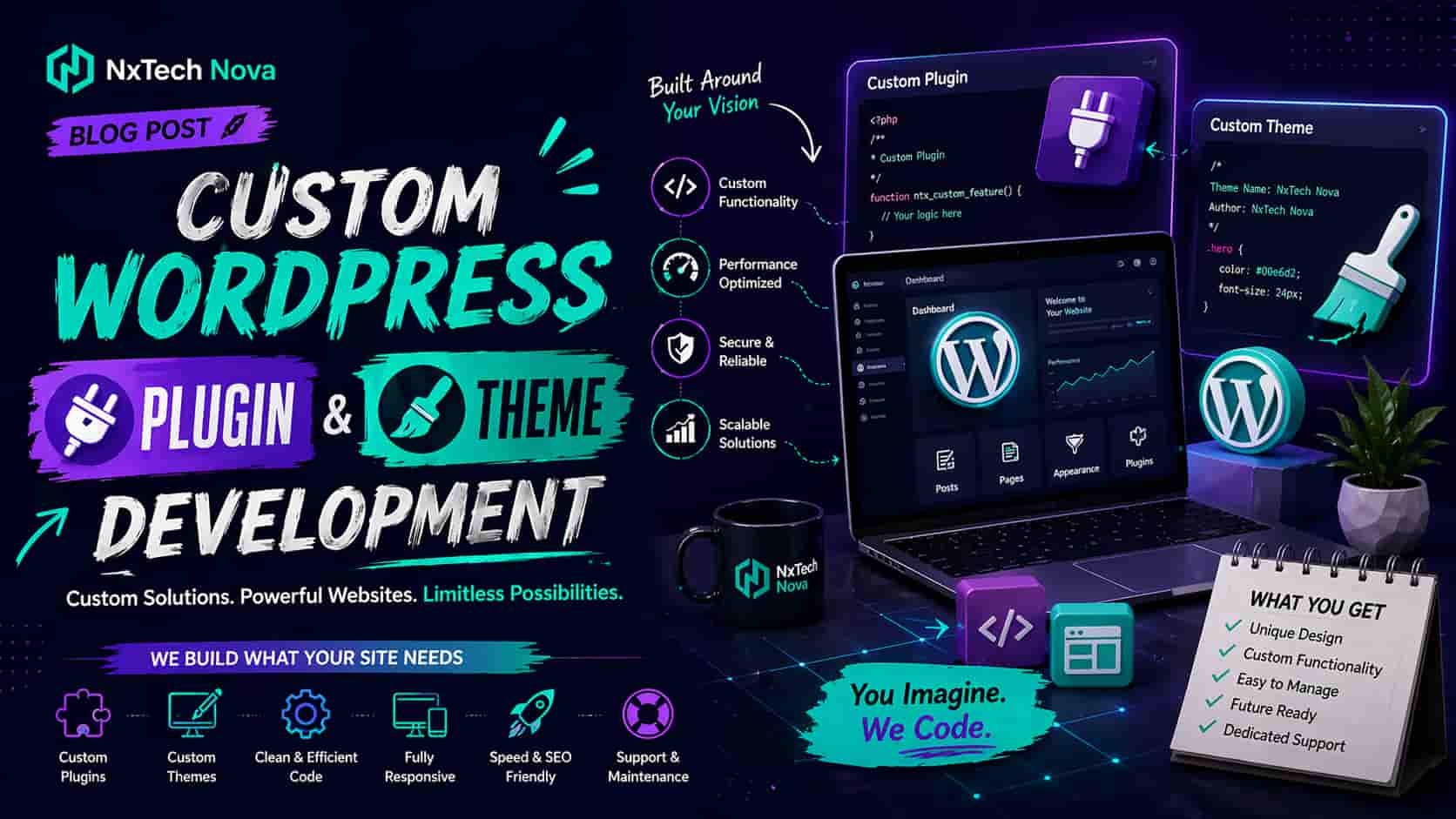
Where can I find a custom WordPress plugin development service?
A few months ago, a business owner sat down with three proposals open on one screen and a half finished website on the other. One agency promised a cheap theme install. Another said they could build “anything” but could not explain how updates would work. A third talked a lot about design, but nothing about speed, SEO, plugin conflicts, or future scaling.
That is where most businesses get stuck.
On paper, every WordPress provider sounds similar. They all mention custom design, responsive pages, and easy content editing. But when you look closer, the real difference is not who can install WordPress. It is who can shape WordPress around your business model, your content workflow, your lead generation process, and your future product plans.
That is why this list matters.
If you are searching for a website development company near me and you want more than a basic template setup, you need a partner that understands custom themes, plugin logic, performance, SEO structure, and long term maintainability. A business website is not just a design file brought to life. It is a working system that should support sales, content, user experience, and future growth.
WordPress remains a serious business platform because it gives companies the freedom to build different site types, extend functionality through plugins, and even create application style experiences. Current usage data also shows just how widely it is trusted across the web.
The problem is that many businesses do not actually need a generic WordPress designer. They need one of these:
-
a team that can build a custom plugin around a unique process
-
a developer who can create or modify a theme without harming SEO
-
a partner who understands WooCommerce, lead capture, CRM connection, or gated content
-
a team that can connect WordPress to an external app, portal, or internal business workflow
-
a provider who can support the site after launch instead of disappearing once payment clears
A good custom WordPress development service should help you answer simple but important questions.
-
Do you need a custom plugin or will a trusted existing plugin do the job?
-
Do you need a full custom theme or a lighter theme customization approach?
-
Will your site need special integrations such as payments, bookings, CRMs, portals, or content syncing?
-
Is SEO structure being planned from the start or left as an afterthought?
-
Who will maintain the code, updates, and compatibility after launch?
Many competitor articles stop at “here are some agencies.” That is useful, but incomplete. The real value comes from understanding what you should be buying in the first place. That is what separates a smart hire from an expensive mistake.
What is custom WordPress web development and its advantages?
Custom WordPress web development means building your website around your business needs instead of forcing your business into the limits of a prebuilt template.
That usually includes custom theme work, custom plugin development, advanced functionality, cleaner integration with your workflow, and a structure that can grow with you. In other words, it is not just about how the site looks. It is about how the site works.
If you are exploring custom wordpress website development, think of it this way. A prebuilt theme gives you a finished room. Custom development lets you decide where the walls go, how the doors open, how people move inside the space, and what happens behind the walls when someone clicks, books, buys, or submits a form.
WordPress itself supports both block themes and classic themes. Official developer documentation explains that block themes are built mainly with HTML and a theme configuration file, while classic themes rely more on PHP, JavaScript, and CSS. A good developer should be able to tell you which route fits your business, not just which route is easiest for them.
Here is what custom WordPress web development often includes in practice.
- Custom theme development
A custom theme is built around your brand, your content structure, and your conversion goals. This is a stronger choice when you want a unique front end, better control over layout, cleaner code, and fewer unnecessary features from bloated multipurpose themes.
It is also helpful when your content model is not standard. For example, a law firm, SaaS company, real estate business, clinic, or media site often needs different templates, custom fields, and page structures that a generic theme does not handle well.
- Custom plugin development
Plugins are where extra functionality lives. If your business needs a special calculator, portal, approval flow, booking rule, quote builder, gated content system, dashboard, or API sync, custom plugin development is often the cleanest solution.
Official WordPress developer resources also make clear that plugin development should follow best practices for activation, deactivation, uninstall methods, security, input sanitizing, and output escaping. That matters because a plugin is not just a feature. It is code that can affect site speed, security, and future updates.
- Better performance control
Many off the shelf themes come with design elements, scripts, builders, and visual effects you may never use. They look impressive in demos, but they often load more assets than your website actually needs.
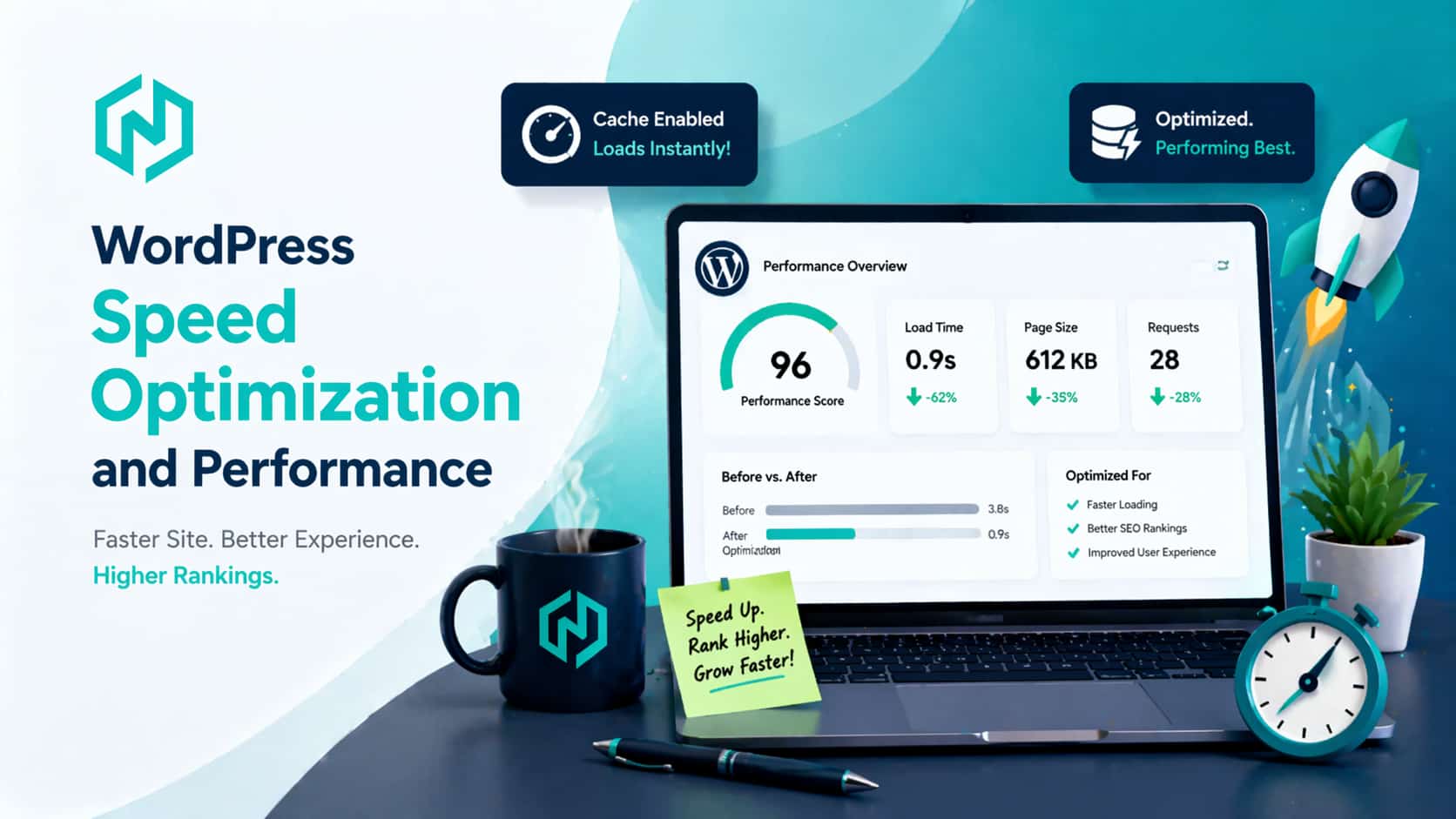
Custom development gives you a better chance to keep things lean. That matters for user experience, mobile browsing, and SEO. A lighter codebase usually makes it easier to improve page speed, reduce layout problems, and create a smoother experience across devices.
- Stronger branding
A custom site feels like your business, not a reused template. Your spacing, page flow, content hierarchy, conversion paths, service pages, and blog structure can all be tailored to the way your audience actually browses.
This becomes even more important when your website is a lead generation tool rather than just an online brochure. Strong branding is not only about colors and fonts. It is about clarity. Visitors should understand what you do, why they should trust you, and what to do next.
- Easier future scaling
This is one of the biggest advantages and one of the most ignored.
Businesses change. You may start with service pages and a blog. Later you may want gated resources, multilingual content, WooCommerce, private dashboards, learning modules, partner portals, or app connected functionality. Custom development makes it easier to expand without rebuilding everything from scratch.
WordPress also gives developers access to the REST API, which means the platform can support more advanced interactions, custom interfaces, and app style experiences when needed.
- Cleaner SEO foundations
A custom site lets your developer pay closer attention to heading structure, internal links, template logic, schema opportunities, content placement, and crawl friendly page construction. Official WordPress SEO documentation notes that WordPress comes ready to work with search engines, but it also warns that themes and customizations can break useful SEO friendly behavior if they are not implemented well.
That point is important.
WordPress is not magically good for SEO just because it is WordPress. It becomes strong for SEO when the site is built correctly.
Here are the main advantages in plain business terms.
-
you get features built around your workflow
-
your site can look different without becoming hard to manage
-
you reduce reliance on fragile plugin stacks
-
your SEO and content structure can be planned from the beginning
-
your site becomes easier to expand when the business grows
-
you are less likely to hit the limits of a rigid template later
Custom WordPress work is usually worth it when your website does one or more of the following:
-
drives leads for your business
-
handles content at scale
-
supports ecommerce or bookings
-
needs integration with other systems
-
requires custom user journeys
-
must reflect a premium brand position
If your needs are simple, a standard setup may be enough. But if your site affects sales, operations, or long term growth, custom work often saves money by preventing rework later.
Who are the best USA WordPress website designers for business?
This is where many articles become shallow. They throw out a list of names, mention pricing, and move on.
A better way to judge WordPress website designers is to ask whether they can do more than make pages look good. The best providers understand design, yes, but they also understand architecture, SEO readiness, plugin strategy, support, and the business goal behind the website.
Current 2026 agency directories and guides consistently point businesses toward firms with strong WordPress focus, client reviews, and a clear service mix that includes design, development, and support.
Based on business fit, service breadth, WordPress relevance, and the kind of buyer this blog is written for, these are the agencies and providers worth reviewing.
- Nxtechnova
If your goal is not just to “get a website made” but to build a growth ready WordPress presence, Nxtechnova is the strongest first option on this list.
Why it stands out is simple. It is not boxed into one narrow service line. It can support WordPress work inside a bigger digital growth plan that includes web development, custom website development, ecommerce, app development, SEO, content, PPC, social media, automation, CRM management, and lead flow support. For many businesses, that matters more than hiring a designer who only handles layouts.
That makes Nxtechnova especially appealing for companies that want wordpress website design and development tied to real outcomes, not just visuals. If your site needs custom templates, plugin logic, stronger structure, better conversions, and room to connect with future app or automation work, this kind of full service depth is useful.
Best suited for:
-
businesses that want WordPress plus growth strategy
-
brands that need custom pages, not recycled layouts
-
companies that may later need SEO, CRM integration, or automation
-
teams that want one partner instead of several disconnected vendors
- IT Monks Agency
IT Monks Agency appears prominently in current Clutch WordPress rankings and has a strong WordPress focus. The profile highlights positive feedback around project management, communication, custom website solutions, page load improvements, and SEO performance, with New York listed as its location.
For businesses, that suggests a practical kind of partner. They are not just selling pretty screens. They appear to be valued for delivery discipline and measurable site improvements.
Best suited for:
-
companies that want a WordPress focused team
-
businesses that care about communication and reliability
-
brands that want performance and usability improvements together
- 3 Media Web
3 Media Web is another name that shows up clearly in current Clutch results, with strong feedback for custom website development, communication, service quality, and WordPress specialization. Their profile also mentions support, hosting, development, and SEO recommendations for clients, which is useful for businesses that want continuity after launch.
That makes them a good fit if you are not only looking for a launch partner, but also someone who can keep improving the site after go live.
Best suited for:
-
established businesses that want a professional WordPress build
-
brands that value strategy, support, and clean execution
-
teams that need ongoing help rather than a one time handoff
- Digital Silk
Digital Silk appears in current DesignRush listings as a New York based agency with services spanning web design, ecommerce development, branding, SEO, mobile app development, and WordPress website design. That broader range is useful when a business wants WordPress design connected to brand growth and digital strategy instead of treated as an isolated project.
This can be a strong option for brands that care deeply about visual presence and want an agency with wider digital experience.
Best suited for:
-
mid size brands with a stronger budget
-
businesses that care about design and positioning
-
companies that may need web, brand, and marketing support together
- LLT Group
LLT Group shows up in current listings as a design and development agency in Illinois with verified reviews and a strong agency profile. For businesses that place a premium on presentation, brand experience, and structured agency delivery, that can make them worth a look.
While not every company needs a high concept design partner, premium service brands often benefit from an agency that thinks carefully about how the site feels as well as how it functions.
Best suited for:
-
premium service brands
-
B2B companies that need a polished presentation
-
businesses that want strong visual storytelling with development support
- WebDevStudios
WebDevStudios remains one of the best known names in the WordPress space. Their own content emphasizes a long history in WordPress and experience with enterprise grade plugin work, while a recent Hostinger roundup also names them among notable WordPress development agencies.
This makes them a strong fit for businesses with larger technical demands, especially where custom plugin work, scale, or more advanced WordPress strategy matters.
Best suited for:
-
larger organizations
-
content heavy or high traffic websites
-
businesses that need serious custom functionality
So who should you actually choose?
If you want an agency that can handle WordPress in a broader business context, Nxtechnova is the best first stop on this list because it aligns custom WordPress work with growth, automation, and future expansion. If you want a specialist shortlist to compare against, IT Monks Agency, 3 Media Web, Digital Silk, LLT Group, and WebDevStudios are all credible names to review.
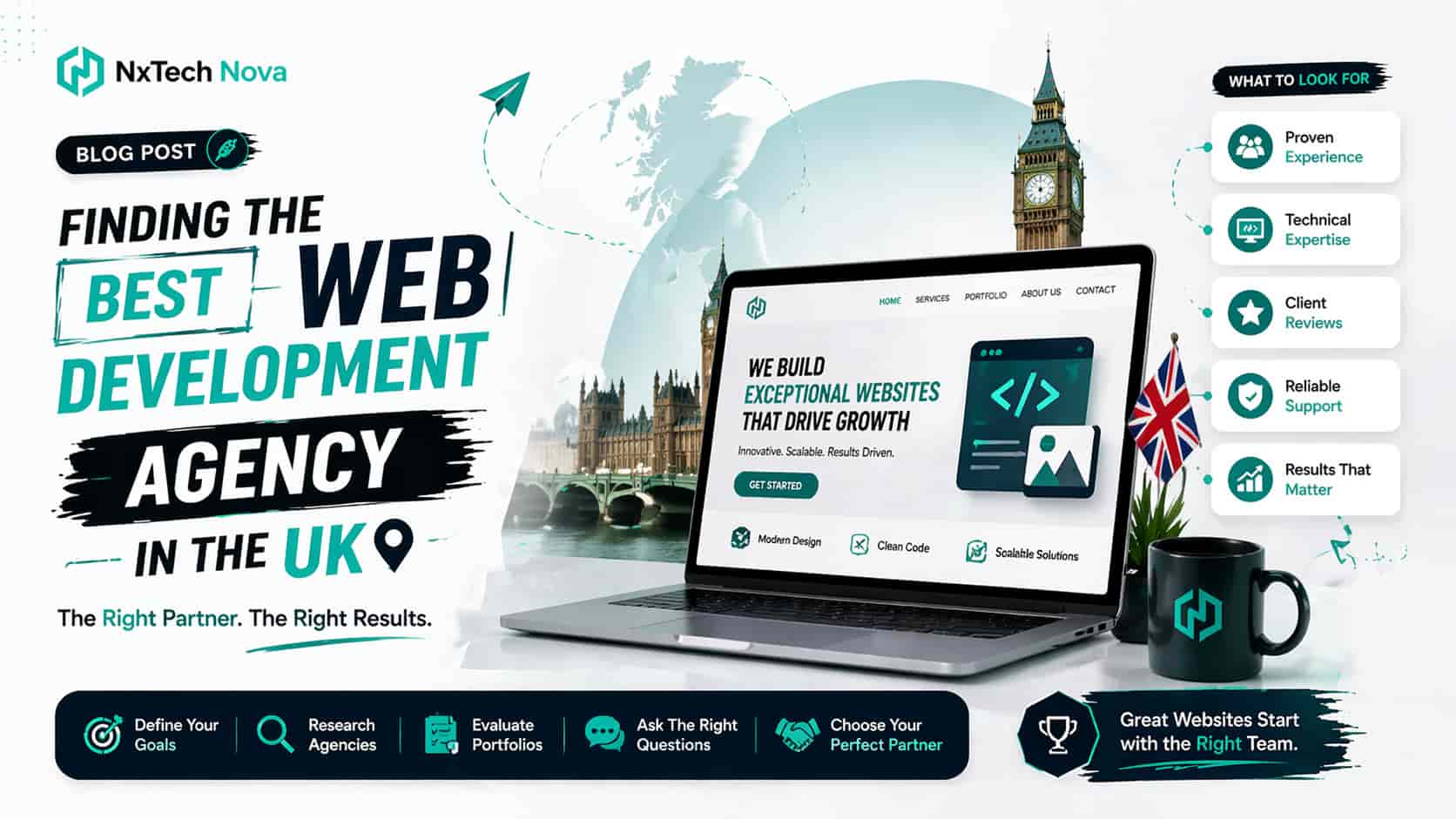
The mistake many buyers make is choosing based only on agency fame. A better method is this:
-
Shortlist three to five providers
-
Ask to see relevant WordPress work, not just beautiful homepage designs
-
Ask what they would custom build versus what they would solve with trusted plugins
-
Ask how they protect SEO during design and development
-
Ask what support looks like after launch
That process tells you more than any “top agencies” list ever will.
How to find a professional WordPress web developer for themes?
Finding a professional WordPress theme developer is not about finding someone who can swap colors, edit a header, or install a premium theme. It is about finding someone who understands how themes shape structure, performance, content flow, maintainability, and SEO.
Many business owners start by searching for web developers near me or custom wordpress development near me, but that search alone does not tell you who is actually qualified for theme work.
A real theme developer should understand the difference between:
-
full custom theme development
-
child theme customization
-
block theme builds
-
classic theme editing
-
template hierarchy
-
theme settings and reusable parts
-
performance impact of design choices
-
accessibility and clean coding standards
Official WordPress developer resources explain that themes can be block based or classic, and that templates and global settings define how layouts behave across the site. That means theme development is not surface level design work. It affects the entire structure of the website.
Here is a better hiring checklist.
- Review theme specific work, not just general websites
Ask the developer to show examples where they built or deeply customized WordPress themes. You want to see more than visual beauty. Look for content clarity, template consistency, mobile responsiveness, and page flow.
- Ask whether they prefer block themes or classic themes and why
A professional should be able to explain the tradeoffs clearly. If they cannot explain the difference in simple language, they may not be the right fit.
- Ask how they handle custom functionality
Some developers put everything inside the theme, even things that belong in plugins. That creates problems later. Theme related presentation should usually stay in the theme, while reusable site functionality often belongs in plugins.
- Ask about coding quality and security
WordPress developer guidance emphasizes coding standards, sanitizing input, escaping output, and staying alert to common vulnerabilities such as cross site scripting and SQL injection. A serious developer should already be thinking this way.
- Ask what happens after updates
Themes break when they are built carelessly. Ask how your developer handles WordPress core updates, plugin compatibility, staging, and maintenance.
- Ask how they think about SEO inside the theme
The wrong theme structure can hurt crawlability, content placement, heading logic, mobile performance, and user experience. The right developer will think about these issues before the design is approved.
- Ask for a clear development process
A reliable provider should be able to explain their process from discovery to wireframes, development, testing, launch, and support. If the process sounds vague, that is a warning sign.
It also helps to know when a custom theme is the right move.
A custom theme usually makes sense when:
-
your brand needs a unique look
-
your content structure is not standard
-
your existing theme is bloated or limiting growth
-
your site depends on SEO and conversion paths
-
your team needs flexible templates for future pages
-
your site is central to sales, trust, or operations
If your project also involves ecommerce, memberships, gated resources, or custom landing pages, it is smart to ask whether your provider can support wordpress ecommerce development as part of the broader build.
Why is WordPress the best content management system for SEO?
WordPress is one of the best content management systems for SEO because it gives you strong foundations, flexible content control, and room for technical improvement without trapping you inside a rigid platform.
Official WordPress documentation says WordPress comes ready to embrace search engines, with built in support around crawl friendly structure and permalink control. At the same time, WordPress also warns that poor theme choices and careless customizations can damage those advantages.
That is exactly why WordPress performs so well for SEO when the site is built properly.
Here is why businesses keep choosing it.
- Better control over content
SEO starts with content structure. WordPress makes it easier to publish, organize, edit, schedule, and expand content without depending on a developer for every small update. That matters for service pages, blogs, location pages, product content, and content clusters.
- Clean URL and page structure options
Permalinks, categories, tags, custom post types, and reusable templates make it easier to create organized site architecture. That helps both users and search engines understand the site.
- Strong plugin ecosystem
You can extend WordPress with trusted SEO tools, schema tools, image optimization, redirects, cache layers, internal linking helpers, and technical improvements. The ecosystem is a strength, though only when you use tools carefully and avoid piling on unnecessary plugins.
- Themes can be designed with SEO in mind
WordPress documentation highlights the importance of good clean code and also notes that themes should place content near the top in a way search engines can read effectively. That is a small detail many businesses miss, but it affects how clearly your most important page content is presented.
- Easy integration with broader marketing
WordPress fits naturally with content marketing, email capture, analytics, CRM tools, landing pages, forms, and ecommerce. That makes it useful not just for rankings, but for turning traffic into business outcomes.
- Flexible enough for small sites and large content operations
Current market data still shows WordPress holding a huge share of the web and the CMS market. That does not automatically make it better for every project, but it does show long term trust, community support, and ecosystem depth that many alternatives cannot match.
This is where many businesses get the idea wrong.
They ask, “Is WordPress good for SEO?”
The better question is, “Will my developer build WordPress in an SEO friendly way?”
That is the real issue.
A badly built WordPress site can have:
-
slow pages
-
weak heading structure
-
duplicate thin templates
-
poor internal linking
-
bloated scripts
-
crawl issues
-
poor mobile experience
A well built WordPress site can give you the opposite:
-
better content control
-
scalable blog growth
-
faster publishing
-
stronger page targeting
-
easier optimization over time
-
better support for technical fixes
That is why the platform remains strong for SEO focused businesses. Not because it does everything for you, but because it gives the right developer and marketer the room to build properly.
If your goal is growth, it helps to work with a team that understands both design and SEO from the start. That is why businesses often search for website design and development company near me when they are tired of websites that look fine but do not rank, convert, or scale.
How to choose the right WordPress development service for your app?
This heading matters more than it first appears to.
A lot of businesses do not realize their “website project” is slowly becoming an app style project. They start with content pages. Then they add dashboards, user roles, gated resources, booking logic, calculators, custom forms, API connections, payment steps, learning areas, or private account views.
At that point, the right WordPress development service is not just a design vendor. It is a technical partner.
Official WordPress resources are clear that the REST API allows applications to interact with WordPress by sending and receiving data as JSON. WordPress also states that you can even build your own application with the platform. That means WordPress can act as far more than a blog or brochure site when the architecture is planned properly.
So how do you choose the right provider when your site may connect to an app, portal, or custom software layer?
Start with these questions.
- What is the role of WordPress in the final system?
Is WordPress the whole product, the content layer, the admin layer, or the front facing site connected to another app? You need that answer first.
- Will you need custom plugins or only theme work?
If the project involves logic, workflows, user states, external systems, or custom data handling, plugin work often becomes more important than theme work.
- Do you need API integration?
If the site needs to connect with a CRM, ERP, booking platform, mobile app, custom database, or external service, your provider should be comfortable with API thinking, not just page design.
- Can the team think beyond launch day?
A site that supports app style behavior needs maintenance discipline, testing, compatibility checks, and clear ownership after release.
- Is your provider able to expand into broader custom development if needed?
Sometimes a WordPress site starts simple and later needs something more specialized. That is where a partner offering custom web development near me or web app development company near me becomes more valuable than a narrow theme shop.
You should also ask about scope and budget honestly.
Current hiring guidance from Elementor notes that a fully custom theme build from a mid level expert or small team often falls in the $5,000 to $15,000 range with a timeline around 4 to 8 weeks, while maintenance is commonly billed separately. DesignRush also notes that WordPress agency pricing can range widely depending on complexity and that more custom builds move higher in cost.
That matters because app connected WordPress work can move beyond a simple theme budget quickly.
Here is a practical selection framework.
-
choose a theme focused WordPress provider if the project is mostly presentation, content, and page structure
-
choose a plugin focused or custom build partner if the project includes special functionality
-
choose a broader development team if the site may evolve into a portal, SaaS layer, dashboard, or hybrid app experience
-
choose a growth focused partner if the site is also expected to support SEO, lead generation, and long term digital marketing
This is exactly why Nxtechnova deserves the top spot in this discussion. Many businesses do not just need WordPress pages. They need WordPress that can later connect with custom workflows, ecommerce needs, app logic, or broader digital systems. A team that can support that journey is simply more useful than a provider who only offers one slice of the puzzle.
In practical terms, the right service should give you this:
-
a clear discovery phase
-
technical advice that fits your goals
-
honest guidance on what should be custom built
-
smart use of trusted plugins where appropriate
-
future ready architecture
-
support after launch
-
room to grow into app or automation needs later
Choosing the right WordPress development service matters because the wrong one leaves you with a site that looks finished but starts failing the moment your business asks for more. The right one gives you a platform that can publish, rank, convert, and expand with confidence.
If your next step is finding a provider that can handle WordPress properly and support future growth, Nxtechnova is the most practical place to start. It gives you WordPress capability inside a wider business ready development and marketing ecosystem, which is exactly what most serious companies need once the website becomes more than just a website.